Musical Journey · 2026-08-25 · 5 min read
Medha Vidyabhushan’s Hari Narayana: A Performance Listening Guide
A source-backed guide to Medha Vidyabhushan’s official Hari Narayana recording, with Purandara Dasa context and a distinct listener pathway beyond the song’s meaning guide.
Quick Facts
- This page focuses on one official Hari Narayana performance and its listening context.
- Suggestions about what to notice are editorial prompts, not technical verdicts.
- The related meaning guide and source notes provide the next layer of context.
In brief
- This is a performance listening guide for Medha Vidyabhushan’s official Hari Narayana recording, not a duplicate lyric translation.
- The official recording identifies Sri Purandara Dasa as lyricist and Dr. Vidyabhushan as composer in its description.
- The page showed 373K views during the site’s August 25, 2026 verification, a public recording milestone rather than a ranking.
Table of Contents
- [A Recording with Its Own Listening Question](#a-recording-with-its-own-listening-question)
- [Hear the Name, Then the Line](#hear-the-name-then-the-line)
- [What the Official Recording Establishes](#what-the-official-recording-establishes)
- [From Recording to Repertoire](#from-recording-to-repertoire)
- [One More Listen](#one-more-listen)
A Recording with Its Own Listening Question
The Hari Narayana meaning guide explains the song’s devotional and namasankeerthanam context. This companion page asks a narrower question: how can a listener approach Medha Vidyabhushan’s official recording without turning it into a contest or repeating the lyric guide?
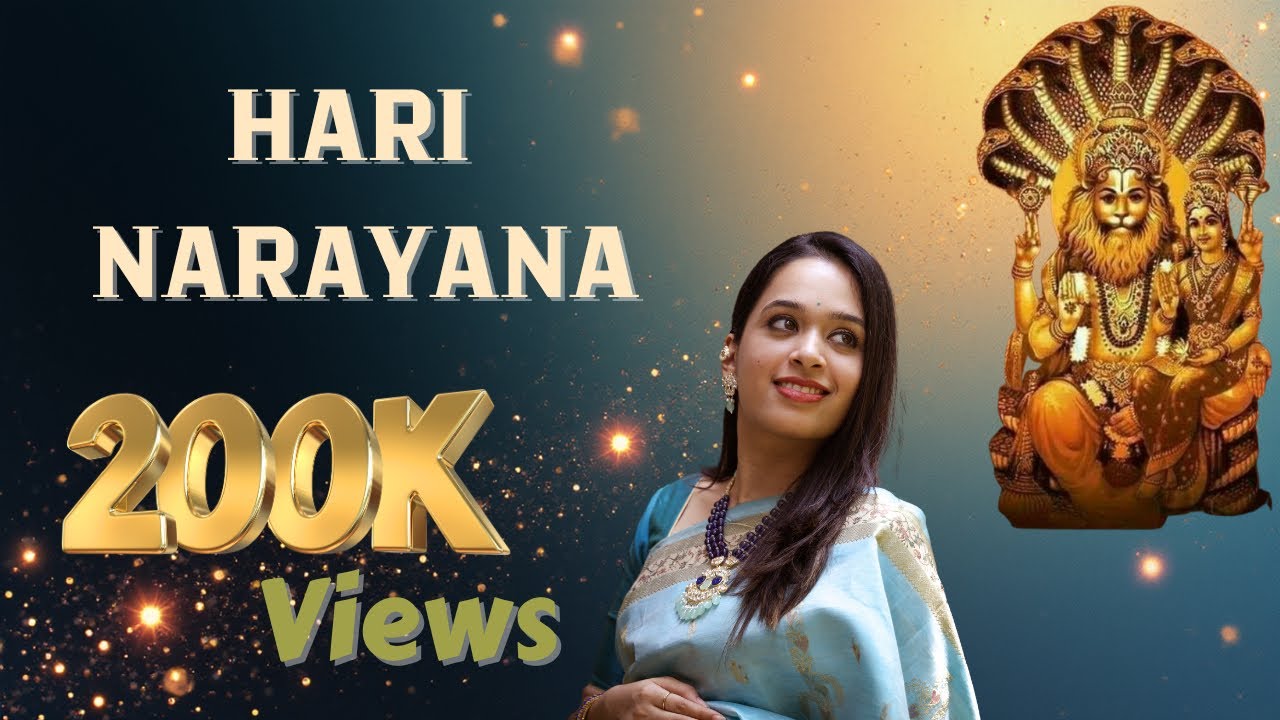
The official video credits Sri Purandara Dasa for the words and Dr. Vidyabhushan for the composition. During the August 25, 2026 site check, the page showed 373K views. Use that number as a dated public record of reach, then return to the sound itself.
Watch the official YouTube video
Hear the Name, Then the Line
Begin with the title phrase. Listen once for the way it arrives, then once for how the surrounding line changes its meaning or energy. You do not need to identify every musical device to notice a refrain. A recognisable return is often a better first doorway than an attempt to master the full composition at once.
For the historical and lyric reference, read the Hari Narayana meaning guide. For a beginner’s musical vocabulary, keep the Raga Guide and Tala Guide nearby.
What the Official Recording Establishes
The official recording gives listeners a direct source for this performance. It identifies the singer, lyricist, and composer in its public description. That is different from a claim that one arrangement is definitive. Carnatic and devotional repertoire has many valid performance approaches, shaped by teachers, occasions, languages, and individual artistic choices.
| Listen | Ask yourself | Use this link next |
|---|---|---|
| First | Which word returns most clearly? | Meaning and lyrics |
| Second | How does the refrain create continuity? | Namasankeerthanam context |
| Third | What can you notice about pulse and return? | Tala Guide |
From Recording to Repertoire
Hari Narayana can be one point on a larger Haridasa listening path. Continue to Toogire Rayara, explore the Devotional Music Traditions hub, or use Sahitya Deep-Dive Cards to connect more recordings with lyric context.
Frequently Asked Questions
Who wrote Hari Narayana?
Medha Vidyabhushan’s official recording credits Sri Purandara Dasa for the words. The source note also links to a lyric archive for the composition context.
Who composed the version in this recording?
The official video description credits Dr. Vidyabhushan as composer for this recording.
Is this a translation of Hari Narayana?
No. The companion meaning guide handles lyric and devotional context. This page is a listener guide for Medha Vidyabhushan’s official performance.
Where can I hear the official recording?
The embedded video and related-video card link directly to the original YouTube recording published by Medha Vidyabhushan.
Can a beginner use this recording for practice?
Use it first as a listening aid. If you are learning to sing, use your teacher’s instructions for pitch, tala, pronunciation, and any version-specific details.
One More Listen
A public recording can make a composition easy to revisit. Let that access lead to careful listening, then to lyric context and teacher-led learning, rather than to a quick judgement about who performs a song best.
Published by Medha Naada
This guide is published by Medha Naada, Medha Vidyabhushan's official portfolio. It combines the credited sources below with plain-language listening or learning prompts. Historical details, song credits, and public records are limited to the cited material.
A written guide can support listening and preparation, but a qualified teacher remains the right source for personal vocal technique, pronunciation feedback, or repertoire decisions.
How this guide is supported
This companion page focuses on a specific official recording rather than duplicating the existing meaning guide. The lyric archive and official video support the named composition and recording credits; listening exercises are editorial guidance.
- hari naaraayaNa. Lakshman Ragde. Purandara Dasa attribution, Kannada lyrics, and documented composition context for Hari Narayana.
- Hari Narayana official performance. Medha Vidyabhushan Official. First-party recording, video credits, and the dated public view figure used only as a recording milestone.