Devotional Tradition · 2026-08-16 · 9 min read
The Tirumala Footsteps: Walking the Alipiri Route and the Power of the Govinda Govinda Chant
Discover the sacred Alipiri walking route to Tirumala - 3,550 steps across 11 km of the Seven Hills. Learn why pilgrims chant Govinda Govinda, the meaning behind the name, and how Medha Vidyabhushan captured this divine journey.
Quick Facts
- This guide explains The Tirumala Footsteps: Walking the Alipiri Route and the Power of the Govinda Govinda Chant within the site's Devotional Tradition learning collection.
- Factual context and practical listening or study suggestions are presented separately.
- Use the linked source notes and related guides when you want to explore the topic further.
Table of Contents
- [Quick Facts: Alipiri Walking Route](#quick-facts-alipiri-walking-route)
- [The Two Ancient Paths to Tirumala](#the-two-ancient-paths-to-tirumala)
- [The Alipiri Route: Step by Step](#the-alipiri-route-step-by-step)
- [Why Pilgrims Chant Govinda Govinda](#why-pilgrims-chant-govinda-govinda)
- [The Seven Sacred Hills (Saptagiri)](#the-seven-sacred-hills-saptagiri)
- [The Spiritual Significance of Walking](#the-spiritual-significance-of-walking)
- [Medha Vidyabhushan's Tirumala Footsteps](#medha-vidyabhushans-tirumala-footsteps)
- [Practical Guide for Pilgrims](#practical-guide-for-pilgrims)
Quick Facts: Alipiri Walking Route
| Detail | Information |
|---|---|
| Total Steps | 3,550 |
| Distance | ~11 km from Alipiri Gate to Tirumala Temple |
| Average Climbing Time | 3–5 hours |
| Starting Point | Alipiri Gate (5 km from Tirupati Bus Stand) |
| Elevation Gain | ~850 meters |
| Alternative Route | Srivari Mettu (2,388 steps, ~3 km, steeper) |
| Best Time | Early morning (4–6 AM) or evening (after 4 PM) |
| Facilities | Rest shelters, drinking water, medical aid every 1 km |
The Two Ancient Paths to Tirumala
For centuries, devotees of Lord Venkateswara have climbed the Seven Hills on foot through ancient step-paths called sopanamargas. Two routes connect the town of Tirupati at the base to the temple town of Tirumala at the summit:
-
Alipiri Mettu - The longer, more gradual route with 3,550 steps spanning approximately 11 km. This is the more commonly used path and has been the primary pilgrimage route for centuries.
-
Srivari Mettu - The shorter, steeper route with 2,388 steps over approximately 3 km. This was the original ancient path, renovated and reopened in 2008 after years of disuse.
Both routes converge near the Tirumala temple complex. The Alipiri route is recommended for first-time climbers due to its gentler gradient and better facilities along the way.
The Alipiri Route: Step by Step
The journey begins at the Alipiri Gate, marked by a towering gopuram (temple tower) that signals the start of the sacred ascent. Here is what pilgrims experience along the way:
Stages of the Climb:
-
Alipiri Gate to Gali Gopuram (Steps 1–1,000) - The initial stretch passes through a forested area with gentle inclines. Devotees begin their chanting here as the energy of the hills envelops them.
-
Gali Gopuram to Moghili Rest House (Steps 1,000–2,000) - The path becomes steeper with more switchbacks. The forest canopy provides shade, and the sounds of birds and distant temple bells create a meditative atmosphere.
-
Moghili to Akka Tangudu (Steps 2,000–2,800) - This is considered the most challenging stretch with the steepest gradient. Devotees often pause at rest shelters here to catch their breath.
-
Akka Tangudu to Tirumala (Steps 2,800–3,550) - The final stretch offers glimpses of the temple town above. The chanting of "Govinda Govinda" grows louder as pilgrims sense the proximity of the divine.
What You'll Encounter Along the Way:
- Stone steps carved into the hillside, many dating back centuries
- Rest mandapams (shelters) every 500–800 meters
- Free drinking water stations maintained by TTD (Tirumala Tirupati Devasthanams)
- Medical aid posts at regular intervals
- Small shrines and sacred trees along the path
- Fellow pilgrims from across India, creating a sense of community
Why Pilgrims Chant Govinda Govinda
The thunderous chant of "Govinda! Govinda!" is the sonic signature of Tirumala. From the moment pilgrims begin their ascent, this two-word mantra fills the air, echoing off the hills and binding thousands of strangers into a single devotional force.
The Meaning of Govinda:
The name "Govinda" carries multiple layers of meaning:
-
Go + Vinda = "Protector of cows/earth" - In Sanskrit, "Go" means cow or earth, and "Vinda" means protector or finder. Lord Venkateswara as Govinda is the protector of all creation.
-
Telugu folk etymology - Local tradition connects it to "Govu Inda" (Telugu for "take the cow"), linking to the legend of Lord Venkateswara's association with Lakshmi's cow.
-
Philosophical meaning - "One who gives joy to the senses" or "One who is known through the Vedas (Go = Vedic words)"
Why the Chant During the Climb:
- Rhythm for the body - The two-syllable chant creates a natural breathing rhythm that helps pilgrims maintain pace during the strenuous climb
- Focus for the mind - Continuous chanting prevents the mind from dwelling on physical exhaustion
- Purification of speech - The Padma Purana states that chanting God's name purifies the devotee with each utterance
- Community bonding - When thousands chant together, individual ego dissolves into collective devotion
- Announcement of arrival - Tradition holds that the Lord hears His devotees approaching and prepares to receive them
The signboards along the route reinforce this practice with the message: "Follow Dharma, Think of Govinda" - a reminder that the physical journey mirrors the spiritual one.
The Seven Sacred Hills (Saptagiri)
Tirumala sits atop the Saptagiri - seven sacred hills that are themselves objects of worship. According to tradition, these hills are the earthly manifestation of Adishesha, the cosmic serpent on whom Lord Vishnu reclines in the celestial ocean.
| Hill Name | Meaning | Significance |
|---|---|---|
| Seshadri | Hill of Sesha | Named after Adishesha himself |
| Vedadri | Hill of Vedas | Where sacred knowledge resides |
| Garudadri | Hill of Garuda | Named after Vishnu's divine eagle |
| Anjanadri | Hill of Anjana | Mother of Hanuman |
| Vrishabhadri | Hill of the Bull | Associated with Nandi/Dharma |
| Narayanadri | Hill of Narayana | Named after Lord Vishnu |
| Venkatadri | Hill of Venkata | Where the main temple stands |
The seven hills also represent the seven stages of spiritual ascent:
- Overcoming ignorance
- Cultivating devotion
- Practicing discipline
- Developing detachment
- Attaining knowledge
- Experiencing divine love
- Achieving union with the divine
Each step on the Alipiri route is therefore not merely physical - it mirrors the soul's journey toward liberation.
The Spiritual Significance of Walking
In an age of ghat roads, buses, and cable cars, why do millions still choose to walk? The answer lies in the Hindu concept of tapas (austerity) and bhakti (devotion):
Why Walking Matters:
- Physical offering - The body's effort becomes an offering to God, replacing material gifts with personal sacrifice
- Equality before God - On the walking path, there is no VIP or common queue. A billionaire walks beside a daily-wage laborer
- Time for reflection - The 3–5 hour journey provides uninterrupted time for prayer, contemplation, and gratitude
- Ancient tradition - Before roads existed, walking was the only way. Continuing this tradition connects modern devotees to centuries of pilgrims before them
- Fulfillment of vows - Many pilgrims walk as part of a vow (harathi/mokku) made during times of difficulty, expressing gratitude for answered prayers
The Tradition of Walking Barefoot:
Many devotees climb barefoot, adding another dimension of austerity. The stone steps, warmed by the sun, become a direct connection between the devotee's body and the sacred earth of Adishesha. This practice is believed to:
- Ground the devotee's energy
- Demonstrate complete surrender
- Connect directly with the divine serpent's body (the hills)
Medha Vidyabhushan's Tirumala Footsteps
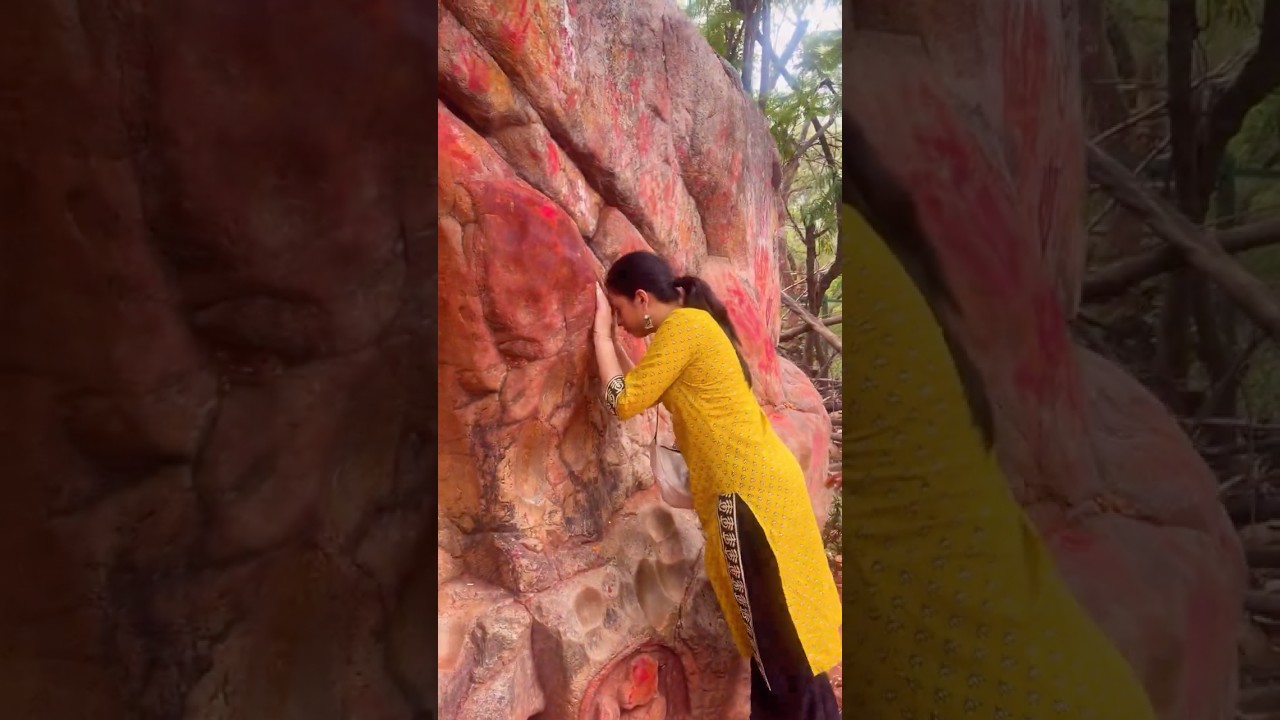
In August 2026, Carnatic vocalist Medha Vidyabhushan captured her own pilgrimage up the Alipiri route in a short video titled "The Tirumala Footsteps." The video, which has garnered over 17,000 views in just days, shows her walking the ancient steps while the Govinda Govinda chant fills the air.
What makes this video significant is not just the visual beauty of the Seven Hills, but the way it connects Medha's musical identity - rooted in Haridasa devotional tradition - with the broader Vaishnava pilgrimage culture. The Haridasas themselves were wandering devotees who walked from temple to temple, composing songs along the way.
Medha's father, Dr. Vidyabhushana, has performed at Tirumala temple numerous times. The family's connection to Venkateswara worship runs deep, reflected in compositions like Hari Narayana and Toogire Rayara that celebrate Vishnu's various forms.
Watch the Video:
Watch the official YouTube video
Practical Guide for Pilgrims
Before You Start:
- Walk barefoot, which is mandatory
- Carry minimal belongings - a small bag with water and snacks
- Start early morning (4–5 AM) to avoid midday heat
- Register at the Alipiri counter for a free token (required)
- Light clothing is recommended; the climb generates significant body heat
During the Climb:
- Maintain a steady pace - rushing leads to exhaustion
- Use the rest mandapams every 500 meters
- Drink water frequently from the free stations
- Join the communal chanting - it genuinely helps maintain rhythm
- If you feel unwell, medical posts are available every 1 km
Route Comparison:
| Feature | Alipiri Mettu | Srivari Mettu |
|---|---|---|
| Steps | 3,550 | 2,388 |
| Distance | ~11 km | ~3 km |
| Gradient | Gradual | Steep |
| Time | 3–5 hours | 2–3 hours |
| Difficulty | Moderate | Challenging |
| Facilities | Excellent | Basic |
| Best For | First-timers, families | Experienced climbers |
Frequently Asked Questions
How many steps are there from Alipiri to Tirumala?
There are 3,550 steps on the Alipiri route from the Alipiri Gate at the base of the Seven Hills to the Tirumala temple town. The total walking distance is approximately 11 km, and most pilgrims complete it in 3–5 hours depending on their pace and rest stops.
Why do people chant Govinda Govinda at Tirupati?
Devotees chant "Govinda Govinda" as a form of namasankeerthanam (devotion through God's name). The name Govinda means "Protector of cows/earth" in Sanskrit. The chant creates a natural breathing rhythm for the climb, purifies the mind, and is believed to announce the devotee's arrival to Lord Venkateswara. The tradition is reinforced by signboards along the route stating "Follow Dharma, Think of Govinda."
What are the seven hills of Tirumala called?
The seven hills (Saptagiri) are: Seshadri, Vedadri, Garudadri, Anjanadri, Vrishabhadri, Narayanadri, and Venkatadri. They are believed to be the earthly form of Adishesha, the cosmic serpent. The main temple of Lord Venkateswara sits atop Venkatadri, the seventh hill.
Is it safe to walk from Alipiri to Tirumala at night?
Yes, the Alipiri route is well-lit and patrolled 24/7 by TTD security. Many devotees prefer to start their climb at 3–4 AM to reach the temple by sunrise. The path has CCTV surveillance, emergency call points, and medical aid posts throughout.
What is the difference between Alipiri and Srivari Mettu?
Alipiri Mettu is the longer (11 km, 3,550 steps), more gradual route suitable for all fitness levels. Srivari Mettu is shorter (3 km, 2,388 steps) but much steeper, recommended for experienced climbers. Both routes converge near the Tirumala temple complex. Alipiri has better facilities including rest shelters, water stations, and medical posts every 1 km.
Published by Medha Naada
This guide is published by Medha Naada, Medha Vidyabhushan's official portfolio. It combines the credited sources below with plain-language listening or learning prompts. Historical details, song credits, and public records are limited to the cited material.
A written guide can support listening and preparation, but a qualified teacher remains the right source for personal vocal technique, pronunciation feedback, or repertoire decisions.
How this guide is supported
Route and facilities information comes from Tirumala Tirupati Devasthanams. The personal and musical reflections in this article describe the portfolio’s featured Tirumala video and are clearly editorial.
- Tirupati to Tirumala on foot. Tirumala Tirupati Devasthanams. Alipiri route information and official pilgrim facilities.
- Govinda, Govinda chant. Tirumala Tirupati Devasthanams News. Temple-board documentation of the chant’s contemporary pilgrimage context.