Devotional Tradition · 2026-08-16 · 11 min read
Vaishnava Janato: Meaning, History, and Why India Sings This Bhajan on Independence Day
Discover the complete meaning of Vaishnava Janato by Narsinh Mehta, why it was Mahatma Gandhi's favorite bhajan, and how it became India's Independence Day anthem. Includes full Gujarati lyrics with English translation.
Quick Facts
- This guide explains Vaishnava Janato: Meaning, History, and Why India Sings This Bhajan on Independence Day within the site's Devotional Tradition learning collection.
- Factual context and practical listening or study suggestions are presented separately.
- Use the linked source notes and related guides when you want to explore the topic further.
Table of Contents
- [Quick Facts](#quick-facts)
- [Who Wrote Vaishnava Janato?](#who-wrote-vaishnava-janato)
- [Full Lyrics with English Translation](#full-lyrics-with-english-translation)
- [Verse-by-Verse Meaning](#verse-by-verse-meaning)
- [Why Gandhi Loved This Bhajan](#why-gandhi-loved-this-bhajan)
- [From Folk Hymn to National Anthem](#from-folk-hymn-to-national-anthem)
- [Why It Is Sung on Independence Day](#why-it-is-sung-on-independence-day)
- [The Musical Journey: Raga Khamaj](#the-musical-journey-raga-khamaj)
- [Medha Vidyabhushan's Rendition](#medha-vidyabhushans-rendition)
Quick Facts
| Detail | Information |
|---|---|
| Composer | Narsinh Mehta (1414-1488) |
| Language | Old Gujarati |
| Century | 15th century |
| Genre | Bhajan (devotional hymn) |
| Raga | Khamaj (popularized version) |
| Original Style | Dayro folk tradition of Saurashtra |
| Made Famous By | Mahatma Gandhi, M.S. Subbulakshmi, Lata Mangeshkar |
| Significance | Gandhi's favorite bhajan, sung during the Salt March (1930) |
| Modern Context | Sung across India on Independence Day and Republic Day |
Who Wrote Vaishnava Janato?
Narsinh Mehta (1414-1488), also known as Narsinh Bhagat, was a 15th-century poet-saint from Gujarat, India. He is honored as the Adi Kavi (first poet) of Gujarati literature. Born into a Nagar Brahmin family in Talaja, near Junagadh, he lost his parents early and was raised by his grandmother.
Key facts about Narsinh Mehta:
- Born in a Nagar Brahmin family in Talaja, Gujarat (1414)
- Considered the first poet of Gujarati literature
- Was ostracized by his community for singing with Dalits and lower castes
- A devout Krishna bhakta who composed hundreds of padas (songs)
- His compositions span from sandhya (dusk) to prabhati (dawn)
- He lived in poverty but was known for his generosity and compassion
- His life story became the subject of the 1940 film "Narsi Bhagat"
Narsinh Mehta was a paradox that would later attract Gandhi: a devout Brahmin who rejected caste orthodoxy, a man of God who lived among the marginalized, and a poet whose simplest words carried the deepest truths.
Full Lyrics with English Translation
| Gujarati (Transliteration) | English Translation |
|---|---|
| Vaishnava jana to tene kahiye, je pida parayi jaane re | Call those people Vaishnava who feel the pain of others |
| Par dukhe upkaar kare, to ye man abhimaan na aane re | Who help those in misery, but never let pride enter their mind |
| Sakal lok maan sahune vande, ninda na kare keni re | They respect everyone in the world, and do not disparage anyone |
| Vaach kaachh man nishchal raakhe, dhan dhan janani teni re | They keep their words, actions and thoughts pure - blessed is their mother |
| Samadrishti ne trishna tyaagi, parastri jene maat re | They see all equally, renounce craving, respect other women as their mother |
| Jihva thaki asatya na bole, pardhan nav jhaale haath re | Their tongue never utters falsehood, their hands never touch others' wealth |
| Moh maya vyaape nahi jene, dridh vairaagya jena man maan re | They are not swayed by worldly attachment, firm detachment resides in their mind |
| Ram naam shun taali re laagi, sakal tirath tena tan maan re | They are enticed by the name of Rama - all pilgrimages reside in their body |
| Van lobhi ne kapat rahit chhe, kaam krodh nivaaryaan re | They have forsaken greed and deceit, conquered desire and anger |
| Bhane Narsaiyo tenu darshan karta, kul ekoter taaryaan re | Says Narsinh: seeing such a soul, seventy-one generations are liberated |
Verse-by-Verse Meaning
Verse 1 (Pallavi): The Definition of a True Vaishnava
The opening verse establishes the central thesis: a true follower of Vishnu is not defined by rituals, caste marks, or temple visits. Instead, a Vaishnava is one who feels the pain of others (pida parayi jaane) and helps the suffering without pride (man abhimaan na aane). This radical redefinition strips away all external markers of religiosity.
Verse 2: Purity of Word, Deed, and Thought
The second verse introduces the concept of trikaran shuddhi (purity of three instruments): speech (vaach), body (kaachh), and mind (man). A true Vaishnava keeps all three aligned and pure. The verse ends with a powerful line: "Blessed is the mother who bore such a soul."
Verse 3: Equality and Self-Control
Here Mehta addresses social conduct:
- Samadrishti (equal vision) - seeing all beings as equal, regardless of caste, wealth, or status
- Trishna tyaagi (renouncing craving) - freedom from material desire
- Parastri jene maat - respecting all women as one's own mother
Verse 4: Truth and Non-Attachment
The fourth verse targets two common human failings:
- The tongue that lies (jihva thaki asatya)
- The hand that steals (pardhan nav jhaale haath)
A Vaishnava is free from both, living in complete honesty and non-covetousness.
Verse 5: The Name of Rama
This verse introduces the concept of namasankeerthanam - the power of God's name. When one is truly absorbed in chanting Rama's name, all sacred pilgrimages (tirath) become embodied within them. There is no need to travel to holy rivers when the divine already resides within.
Verse 6 (Charana): Liberation Through Virtue
The concluding verse is Narsinh Mehta's signature (bhane Narsaiyo). He declares that merely seeing (darshan) such a virtuous soul is enough to liberate seventy-one generations of their family. This is the ultimate reward of righteous living - not personal salvation alone, but collective liberation.
Why Gandhi Loved This Bhajan
Mahatma Gandhi's relationship with Vaishnava Janato was not casual appreciation - it was a philosophical identification. The bhajan became the soundtrack of his life and movement for several reasons:
1. It Defined His Ideal Person
Gandhi saw in Mehta's words the exact blueprint of the person he wanted every Indian to become: compassionate, truthful, humble, and free from greed. The bhajan was not about worshipping God - it was about becoming godly.
2. It Was Sung During the Salt March (1930)
As Gandhi commenced his 390-km march to the sea in 1930, his companion Narayan Khare sang Vaishnava Janato. The bhajan remained on the lips of Gandhi and his followers throughout the Dandi March, becoming inseparable from the independence movement.
3. It Was a Daily Practice at Sabarmati Ashram
Every morning and evening prayer at Gandhi's Sabarmati Ashram included this bhajan. It was part of the Ashram Bhajanavali (prayer book) compiled by Narayan Moreshwar Khare, who was appointed by Vishnu Digambar Paluskar as the ashram's music instructor in 1918.
4. It Transcended Religion
Though literally addressed to Vaishnavites (followers of Vishnu), the bhajan's message is universal. Gandhi, who battled against religious division his entire life, loved that this hymn defined goodness through action and character, not through sectarian identity.
5. It Challenged Caste
Just as Narsinh Mehta was ostracized for singing with Dalits, Gandhi fought against untouchability. The bhajan's insistence on "samadrishti" (equal vision) aligned perfectly with Gandhi's social reform agenda.
From Folk Hymn to National Anthem
The journey of Vaishnava Janato from a Saurashtra folk song to a national symbol is a fascinating story of musical transformation:
Original Form (15th-19th century):
- Sung in the dayro folk tradition of Saurashtra
- Accompanied only by ektara (single-string instrument) and manjira (cymbals)
- Raw, full-throated, earthy singing style
- Part of village gatherings mixing music, storytelling, and spiritual discourse
Gandhi Era (1918-1948):
- Shankarrao Vyas set it to Raga Khamaj at the request of Narayan Khare
- Became a structured congregational prayer song
- Recorded on 78 RPM records
- Featured in the 1940 film "Narsi Bhagat" with music by Shankarrao Vyas
Post-Independence (1948-present):
- M.S. Subbulakshmi's rendition at the United Nations (1966) made it internationally famous
- Lata Mangeshkar's version became the standard popular recording
- In 2018, for Gandhi's 150th birth anniversary, artists from 124 nations sang it
- A.R. Rahman composed a new version for the 2023 film "Gandhi Godse: Ek Yudh"
- Sung at Republic Day and Independence Day celebrations across India
Why It Is Sung on Independence Day
Vaishnava Janato has become synonymous with Indian Independence Day celebrations for several interconnected reasons:
1. Historical Association with the Freedom Movement
The bhajan was literally sung during India's most iconic act of civil disobedience - the Salt March. It accompanied the freedom fighters in their darkest hours and their greatest triumphs.
2. Gandhi's Vision for Free India
Independence Day is not just about celebrating freedom from British rule - it is about recommitting to the values that the freedom fighters stood for. Vaishnava Janato encapsulates those values: compassion, truth, equality, and selfless service.
3. A Reminder of Duty
The bhajan serves as an annual reminder that freedom comes with responsibility. A free citizen, like a true Vaishnava, must:
- Feel the pain of fellow citizens
- Help the suffering without pride
- Maintain truth in word and deed
- See all people as equal
4. Unity in Diversity
On a day when India celebrates its unity, this bhajan - written by a Gujarati poet, loved by a leader from Gujarat, sung in schools from Kashmir to Kanyakumari - represents the cultural thread that binds the nation.
The Musical Journey: Raga Khamaj
The most widely known version of Vaishnava Janato is set in Raga Khamaj, a late-evening raga known for its romantic and devotional mood.
About Raga Khamaj:
- Time: Late evening (9 PM - 12 AM)
- Mood: Romantic, devotional, tender
- Scale: Sa Re Ga Ma Pa Dha ni Sa (uses both shuddha and komal Ni)
- Thaat: Khamaj
- Famous compositions: Numerous thumris, dadras, and bhajans
The choice of Khamaj was deliberate - it is one of the most accessible ragas, easily understood by untrained listeners while still carrying emotional depth. The raga's gentle, lilting quality makes the bhajan easy to sing collectively, which was essential for its use in ashram prayers and public gatherings.
Notable Renditions:
- M.S. Subbulakshmi - The Carnatic legend's version at the UN General Assembly (1966) remains definitive
- Lata Mangeshkar - The most popular recorded version, sweet and devotional
- Jagjit Singh - A ghazal-style interpretation with deeper emotional weight
- A.R. Rahman - Modern orchestral arrangement for the 2023 film
- Medha Vidyabhushan - A fresh Carnatic-influenced rendition released on Independence Day 2026
Medha Vidyabhushan's Rendition
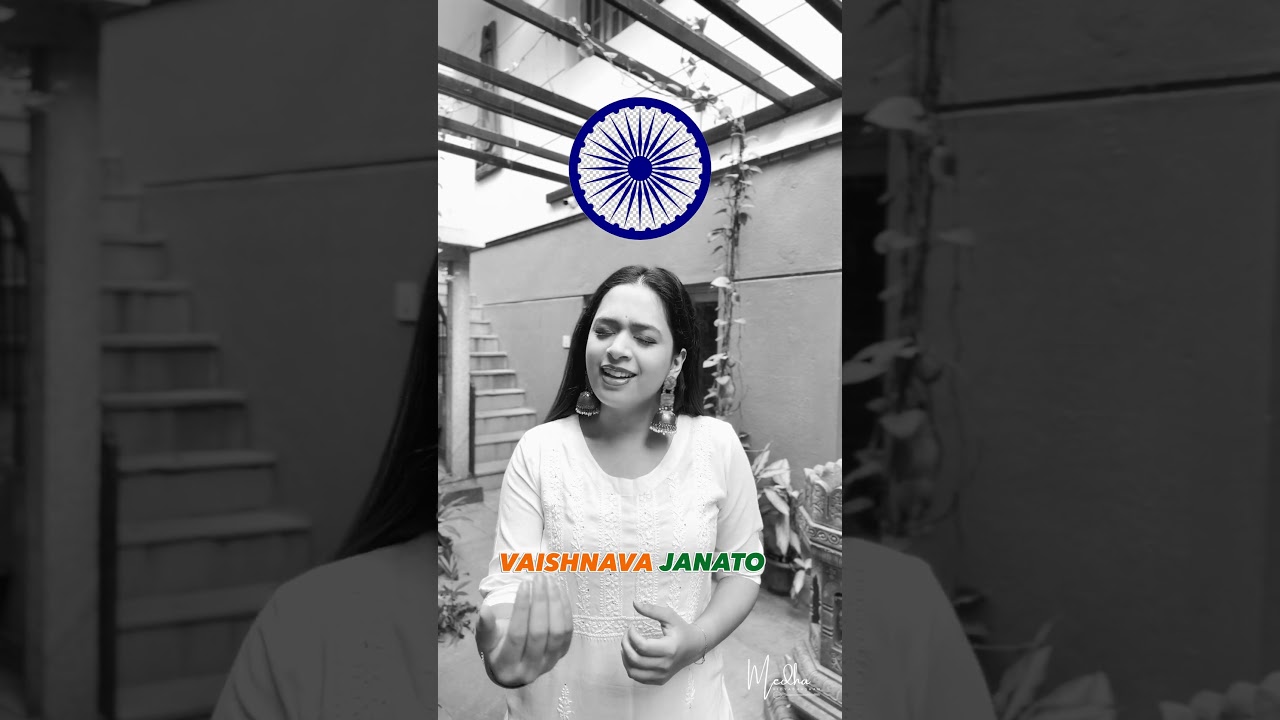
On Independence Day 2026 (August 15), Carnatic vocalist Medha Vidyabhushan released her own rendition of Vaishnava Janato as a YouTube short. The video, which has already garnered thousands of views, brings a distinctly South Indian classical sensibility to this Gujarati bhajan.
What makes Medha's version notable is the bridge it creates between two devotional traditions:
- Narsinh Mehta's Vaishnava bhakti from 15th-century Gujarat
- The Haridasa tradition of Karnataka that Medha represents
Both traditions share the same core values: compassion for all beings, devotion through God's name, rejection of caste hierarchy, and the belief that true worship is expressed through righteous action, not ritual.
This is not Medha's first engagement with patriotic devotion. Her channel features compositions that celebrate India's spiritual heritage, from Hari Narayana to Jagadodharana, and her recent Tirumala Footsteps video connects pilgrimage traditions across South India.
Watch the Video:
Watch the official YouTube video
Frequently Asked Questions
What is the meaning of Vaishnava Janato?
Vaishnava Janato means "Call those people Vaishnava (followers of Vishnu) who feel the pain of others." The bhajan, written by 15th-century Gujarati poet Narsinh Mehta, defines a true devotee not by religious rituals but by their compassion, truthfulness, humility, and selfless service to others.
Who wrote Vaishnava Janato?
Vaishnava Janato was written by Narsinh Mehta (1414-1488), a 15th-century poet-saint from Gujarat, India. He is honored as the Adi Kavi (first poet) of Gujarati literature. He was born in a Nagar Brahmin family in Talaja but was ostracized for his association with people of all castes.
Why was Vaishnava Janato Gandhi's favorite bhajan?
Gandhi loved Vaishnava Janato because it defined goodness through character and action rather than religious identity. The bhajan's emphasis on compassion, truth, equality, and non-attachment aligned perfectly with his philosophy of satyagraha and social reform. It was sung daily at Sabarmati Ashram and during the Salt March in 1930.
Why is Vaishnava Janato sung on Independence Day?
Vaishnava Janato is sung on Independence Day because of its deep association with India's freedom movement and Mahatma Gandhi. The bhajan was sung during the Salt March and represents the values that freedom fighters stood for: compassion, equality, truth, and selfless service. It serves as an annual reminder that freedom comes with the responsibility to serve others.
What raga is Vaishnava Janato set in?
The most popular version of Vaishnava Janato is set in Raga Khamaj, a late-evening raga known for its tender and devotional mood. This arrangement was created by Shankarrao Vyas at the request of Narayan Khare for use in Gandhi's Sabarmati Ashram prayers around 1918.
Published by Medha Naada
This guide is published by Medha Naada, Medha Vidyabhushan's official portfolio. It combines the credited sources below with plain-language listening or learning prompts. Historical details, song credits, and public records are limited to the cited material.
A written guide can support listening and preparation, but a qualified teacher remains the right source for personal vocal technique, pronunciation feedback, or repertoire decisions.
How this guide is supported
The cited historical sources support the bhajan's Narsinh Mehta attribution and Gandhi association. The article's Independence Day framing is contemporary editorial context, not a claim about official observance.
- How Vaishnava Jana To changed from Gandhi's time to ours. Malini Nair, Bombay Sarvodaya Mandal and Gandhi Research Foundation. Narsinh Mehta attribution and the bhajan's place in Gandhi's ashram and public life.
- Vaishnava Janato: Its place in Gandhi's life. Vinay Lal, UCLA South Asia Studies. Historical and ethical context for the bhajan's relationship to Gandhi.