Concert Guide · 2026-09-04 · 5 min read
Mridangam in a Carnatic Concert: A First Listener’s Guide
A plain-language guide to hearing the mridangam as rhythmic support in a Carnatic concert, including a gentle introduction to the percussion feature.
Quick Facts
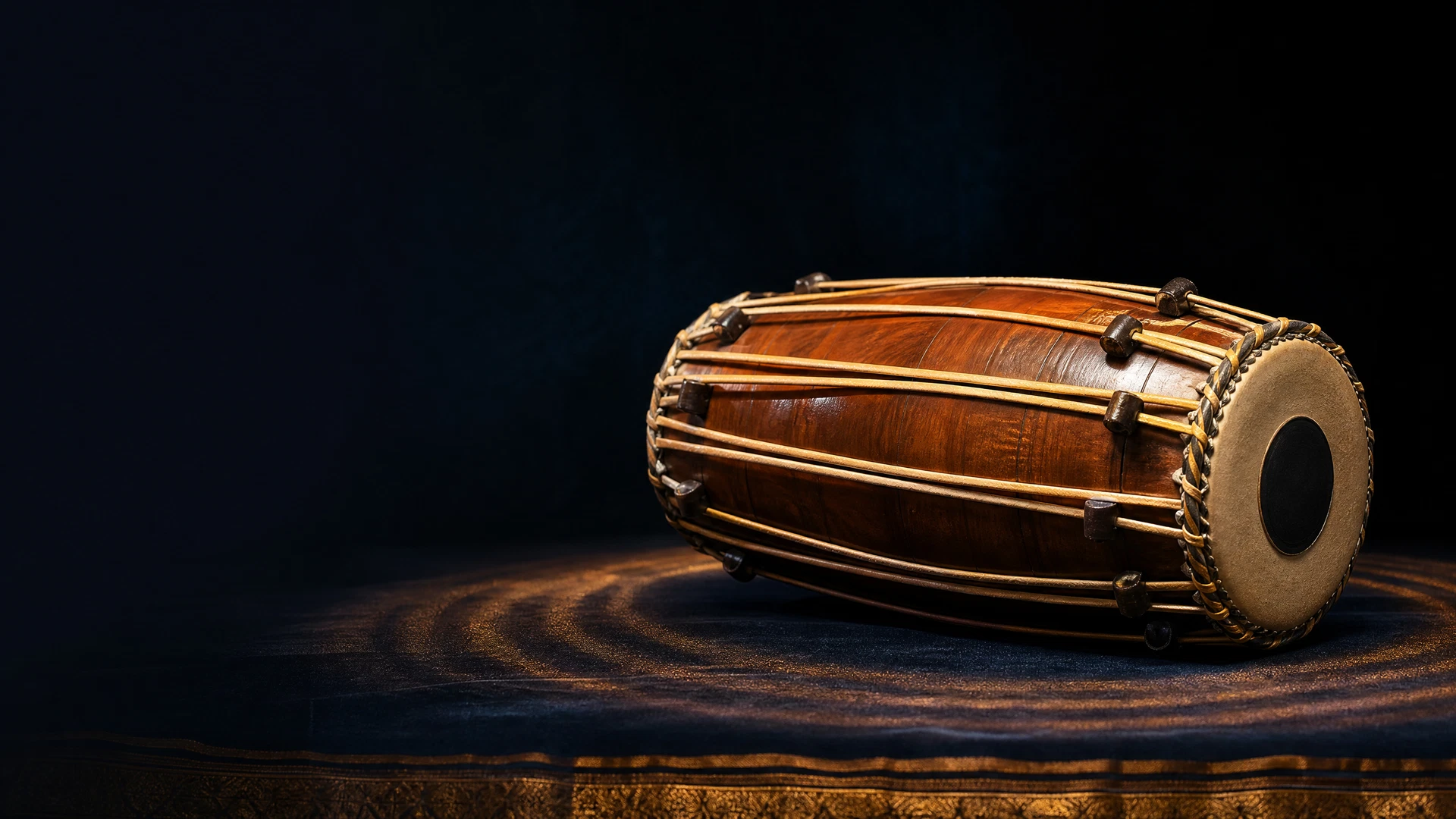
- The mridangam is a principal South Indian classical percussion instrument with two heads.
- In a common Carnatic concert ensemble, it supports the music before any percussion-focused section arrives.
- A tani avartanam gives percussion focused space in many programmes, but its shape can vary.
- First-time listeners can begin with pulse, return, and shared arrival rather than technical counting.
Table of Contents
- [Start with the Pulse](#start-with-the-pulse)
- [What the Instrument Is](#what-the-instrument-is)
- [How to Listen During a Song](#how-to-listen-during-a-song)
- [When the Percussion Feature Arrives](#when-the-percussion-feature-arrives)
- [A Listener's Small Practice](#a-listeners-small-practice)
Start with the Pulse
The mridangam can seem complicated on a first listen because it carries more detail than a simple metronome. Yet you do not need to count every phrase to enjoy it. Start with the pulse that helps a song move forward. Notice when the sound feels light, when it feels more active, and when the ensemble seems to gather at a shared point.
The National Institute of Design's D'Source introduction describes the mridangam as a principal percussion instrument in South Indian classical music, with two heads and tuning as part of its construction. Darbar's concert-format guide places mridangam within a common Carnatic ensemble alongside melodic accompaniment and other percussion instruments. Those facts give you a useful base. The rest of this guide offers listening prompts, not rules for playing or judging the instrument.
What the Instrument Is
A mridangam is a double-headed drum. Its sound can change with touch, placement, tuning, and musical context. You may hear a deeper or more resonant sound from one side and a brighter response from the other, but there is no need to memorise technical vocabulary before listening.
| Instead of asking | Try asking |
|---|---|
| Can I count every stroke? | Can I feel where the ensemble returns? |
| Is the drum only keeping time? | How does the rhythm support the singer or instrumentalist? |
| Did I understand the whole pattern? | Which moment made the pulse clearer to me? |
| What is the correct reaction? | What would I like to hear again? |
This shift matters. A listener who is relaxed enough to notice a return often learns more than a listener who is worried about making a technical mistake.
How to Listen During a Song
Find a steady point
If you know the tala, you may keep it gently in the way your teacher has shown you. If you do not, simply listen for a recurring sense of cycle. The Tala Guide gives a careful starting point for hand gestures and common rhythm language.
Hear support, not separation
During a composed passage, the mridangam is part of the whole sound. Try to hear it with the vocalist and violin rather than as a separate solo. The rhythm may become more noticeable near a phrase ending, but your first task is only to observe how the group arrives together.
Return to a recording
An official recording gives you the chance to revisit a section. Use the original Toogire Rayara concert video as a patient listening source. On the first pass, follow the song. On the next pass, keep the mridangam in the edge of your attention. Do not pause every few seconds. Let the larger movement stay intact.
When the Percussion Feature Arrives
In a common Carnatic concert outline, a tani avartanam is a percussion feature. It may involve mridangam and, depending on the ensemble, another percussion instrument. The exact place, length, and detail can vary. It is better to see it as a change in attention than as a mandatory test for the audience.
| During a percussion feature | A helpful first-listener approach |
|---|---|
| The rhythm becomes the focus | Let go of the need to follow the vocal line |
| A phrase seems to repeat or develop | Notice the return without naming it immediately |
| Other percussion joins | Listen for contrast and conversation in the sound |
| The ensemble returns to the song | Hear the arrival as a shared resolution |
For more context, read the Tani Avartanam listening guide. It goes deeper into that section while keeping the beginner boundary clear: appreciation can come before analysis.
A Listener's Small Practice
At your next concert or recording, choose one question. Perhaps ask, "When do I feel the pulse most clearly?" Or ask, "What changes just before the ensemble returns together?" Keep the answer short. You are building a relationship with rhythmic movement, not writing an exam answer.
If you are learning to play, a teacher is essential for posture, technique, repertoire, and tala practice. This guide is for listening. Let it make your next concert feel more connected, then take your curiosity to a knowledgeable performer or teacher.
Frequently Asked Questions
What is a mridangam?
The mridangam is a principal South Indian classical percussion instrument. It has two heads and is tuned for performance.
Do I need to know tala to enjoy the mridangam?
No. Start by noticing pulse, return, and shared arrival. Tala knowledge can deepen listening later, but it is not required for a first concert.
Is the mridangam only heard during a solo?
No. It supports the ensemble through much of a concert. A tani avartanam simply gives percussion a more focused listening space in many programmes.
What is tani avartanam?
It is a percussion feature in a common Carnatic concert format. The precise shape of the section varies by performance and ensemble.
How can I learn more after this guide?
Continue with the Tani Avartanam guide, the Tala Guide, or a teacher-led rhythm class.
Published by Medha Naada
This guide is published by Medha Naada, Medha Vidyabhushan's official portfolio. It combines the credited sources below with plain-language listening or learning prompts. Historical details, song credits, and public records are limited to the cited material.
A written guide can support listening and preparation, but a qualified teacher remains the right source for personal vocal technique, pronunciation feedback, or repertoire decisions.
How this guide is supported
This article is for first-time listening, not instrumental instruction. The sources support the mridangam's basic construction and its place in a common concert ensemble. All listening exercises are Medha Naada editorial guidance.
- Making of Mridangam: Introduction. National Institute of Design D'Source. A design-institution introduction to the mridangam as a principal South Indian classical percussion instrument with two heads and tuning.
- Performance Format for Carnatic Concerts: sections of a Kutcheri. Darbar. A concert-format reference that places mridangam and possible additional percussion in a common Carnatic ensemble and describes tani avartanam context.