Concert Guide · 2026-08-26 · 5 min read
Tani Avartanam Explained: A First Listener’s Guide to the Percussion Solo
Understand tani avartanam in a Carnatic concert. Learn what the percussion solo is, how it connects to the main composition, and simple ways to listen without needing advanced tala calculations.
Quick Facts
- Tani avartanam is a featured percussion solo in a Carnatic concert.
- It commonly appears in connection with a substantial main composition, though programmes vary.
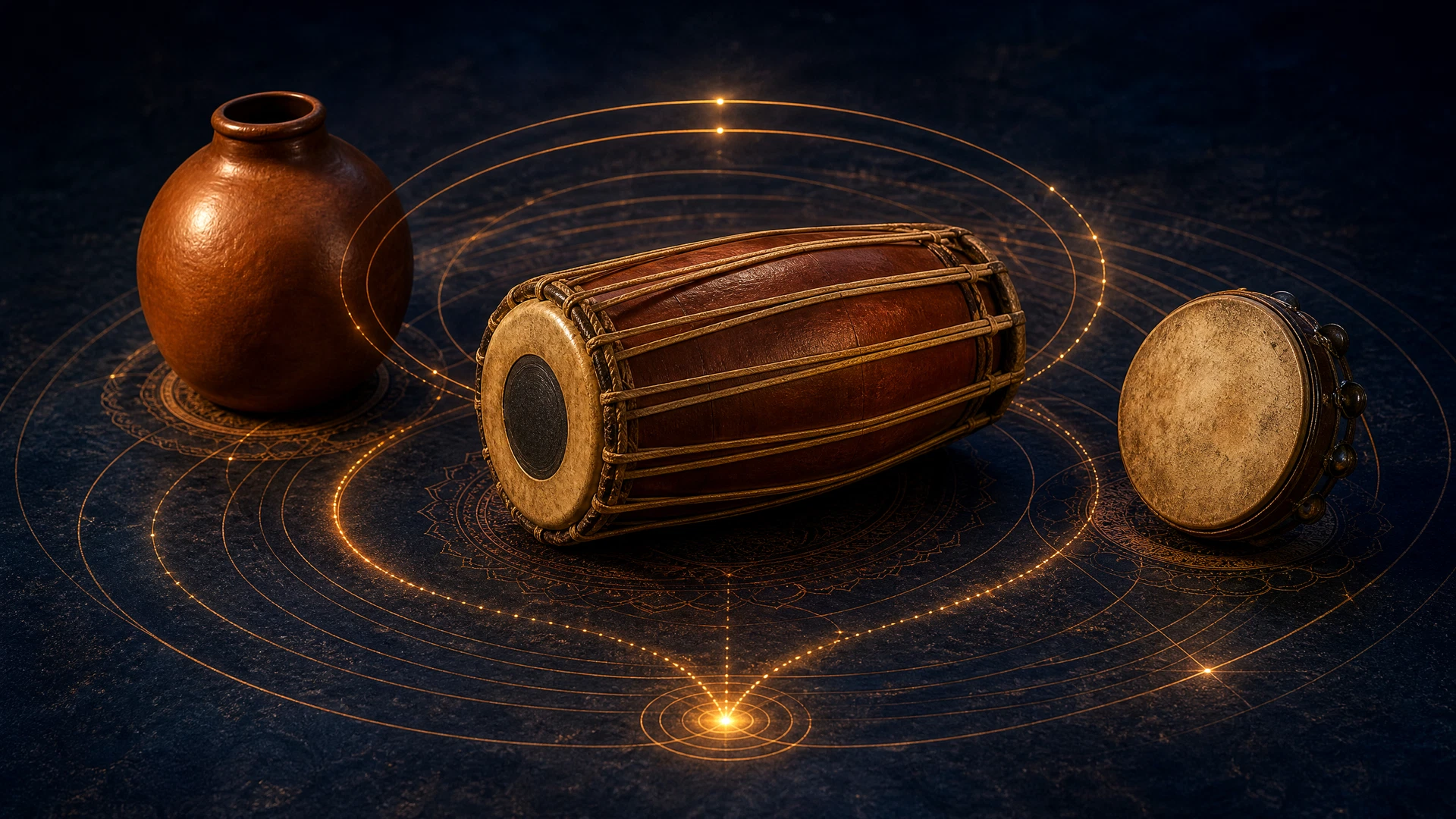
- The mridangam may be joined by instruments such as ghatam or kanjira.
- The solo remains connected to the tala of the larger musical setting.
- A listener can begin by following contrast, exchange, and the eventual return to the composition.
Table of Contents
- [What Tani Avartanam Is](#what-tani-avartanam-is)
- [Why It Belongs in the Concert](#why-it-belongs-in-the-concert)
- [What to Listen for First](#what-to-listen-for-first)
- [The Return to the Kriti](#the-return-to-the-kriti)
- [A Gentle Tala Pathway](#a-gentle-tala-pathway)
- [Let Rhythm Come Forward](#let-rhythm-come-forward)
What Tani Avartanam Is
Tani avartanam is the percussion solo heard in many Carnatic concerts. Darbar describes it as a section where one or more percussionists display complex rhythmic patterns. Sruti places it within a concert where both composed and improvised music have room to unfold.
The word “solo” can be misleading if it makes you imagine separation. The percussionists are still in conversation with the tala that has shaped the main composition. The pause from voice or violin simply lets rhythm take the foreground.
Why It Belongs in the Concert
A Carnatic ensemble is not built around one kind of musical attention. The vocalist or lead instrumentalist, melodic accompaniment, and percussion each have distinct roles. Tani avartanam gives the rhythmic side its own audible space.
| Before the tani | During the tani | After the tani |
|---|---|---|
| A main composition establishes raga and tala | Percussion patterns move through the tala framework | The composition returns, reconnecting the ensemble |
Raga Surabhi’s laya series specifically points to the ending of a tani and the start of the kriti as an important listening moment. That return is a useful anchor for newcomers.
What to Listen for First
Do not begin by trying to calculate every phrase. Start with contrasts.
- Notice which percussion sound is leading a moment.
- Listen for short exchanges between instruments.
- Notice whether a phrase becomes denser or more spacious.
- Wait for a shared-feeling conclusion rather than guessing when it should arrive.
You might notice that a passage feels more like a conversation than a drum break. That is a good observation. The sense of relationship is part of the pleasure.
The Return to the Kriti
The re-entry of the composition is where your earlier listening pays off. You may not know the tala name, but you can hear the ensemble come together again. This is also a good place to appreciate the timing shared by every musician on stage.
Watch the official YouTube video
While listening to this official Jaya Jayatu Srirama performance, focus on the difference between a lyric-led passage and a percussion-led passage. Do not assume every instrumental moment is a tani. Let the return to a familiar line confirm the larger shape.
A Gentle Tala Pathway
The Tala Guide gives a practical introduction to cycles such as Adi Tala and Misra Chapu. Start there if you would like to count along. The Konnakol guide offers another entry through spoken rhythmic syllables.
For concert etiquette and programme context, visit the first-time concert guide.
Frequently Asked Questions
Is tani avartanam included in every Carnatic concert?
It is a common feature of many full-length concerts, especially around a substantial main item, but programmes and durations vary.
Which instruments may appear in a tani avartanam?
The mridangam is central in many Carnatic ensembles. Ghatam, kanjira, morsing, or other percussion may also participate depending on the programme.
Should the audience keep tala during the tani?
Experienced listeners may do so. New listeners can simply follow the change in energy and wait for the ensemble’s return to the composition.
When should I applaud?
Concert customs vary by venue and audience. A natural point is after the tani concludes and the ensemble has completed the transition back into the main piece.
Is tani avartanam only about speed?
No. Tempo can be part of the excitement, but phrasing, contrast, coordination, and resolution are equally important to the experience.
Let Rhythm Come Forward
You do not need advanced calculations to begin enjoying tani avartanam. Hear the conversation, notice the changing texture, and stay for the moment when the whole ensemble meets again.
Published by Medha Naada
This guide is published by Medha Naada, Medha Vidyabhushan's official portfolio. It combines the credited sources below with plain-language listening or learning prompts. Historical details, song credits, and public records are limited to the cited material.
A written guide can support listening and preparation, but a qualified teacher remains the right source for personal vocal technique, pronunciation feedback, or repertoire decisions.
How this guide is supported
This page presents tani avartanam as a listener pathway. The cited sources support its percussion-solo and concert-context descriptions. Statements about specific programme order are deliberately framed as common practice, not as a fixed rule.
- Performance Format for Carnatic Concerts: sections of a Kutcheri. Darbar. Tani avartanam as a section in which one or more percussionists perform rhythmic patterns within the larger Carnatic concert format.
- Laya Lahiri: Tani Avartanam Conclusion. Raga Surabhi. The relationship between the end of tani avartanam and the return to the kriti, plus a beginner-oriented percussion-appreciation context.