Music Theory · 2026-08-26 · 5 min read
What Is Manodharma in Carnatic Music? A Listener’s Guide to Improvisation
A clear guide to manodharma in Carnatic music. Learn how raga alapana, neraval, kalpana swaras, and tanam create music in the moment while remaining grounded in raga and tala.
Quick Facts
- Manodharma is the name commonly used for improvised or imaginative music in the Carnatic tradition.
- It does not mean that anything can happen. Raga character, tala, and the composition still give the artist a musical frame.
- Raga alapana, tanam, neraval, and kalpana swaras are widely recognised manodharma settings.
- A listener does not need to identify every technical move to enjoy the sense of unfolding.
- For a student, manodharma belongs beside patient teacher-led work on compositions, not ahead of it.
Table of Contents
- [What Manodharma Means](#what-manodharma-means)
- [Freedom with a Musical Home](#freedom-with-a-musical-home)
- [Four Places You May Hear It](#four-places-you-may-hear-it)
- [A Simple Way to Listen](#a-simple-way-to-listen)
- [Where a Student Can Begin](#where-a-student-can-begin)
- [Keep Listening for the Return](#keep-listening-for-the-return)
What Manodharma Means
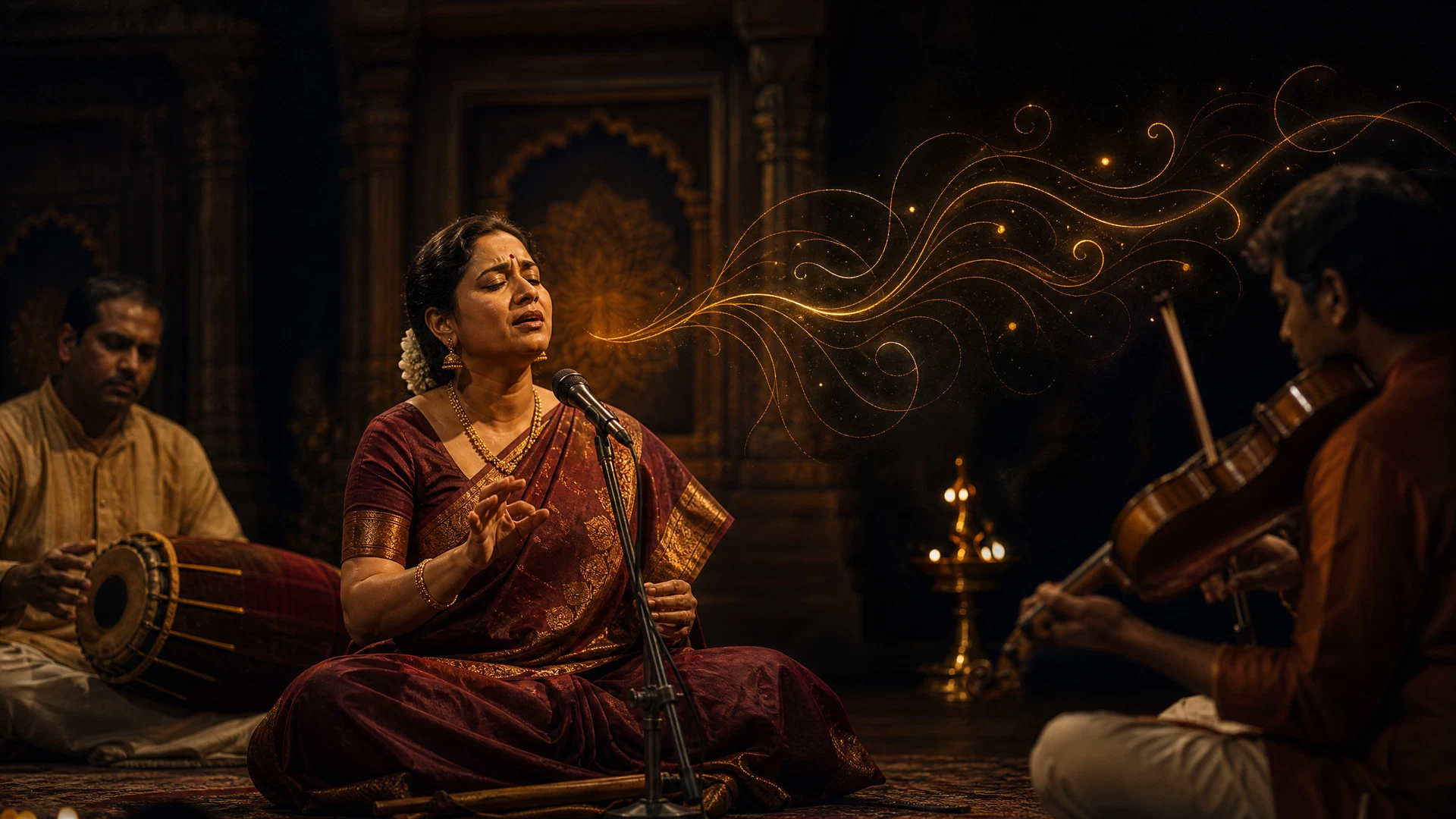
Manodharma is often translated as imaginative music. That phrase is useful, but it can make a Carnatic performance sound unplanned. Here is the more helpful picture: an artist creates in the moment while remaining answerable to the raga, the tala when rhythm is present, and the musical character of the composition.
Carnatic Corner groups raga alapana, tanam, neraval, and kalpana swaras under manodharma. HCL Concerts makes a related listener point: these passages can feel spontaneous, yet they still return to a recognisable melodic and rhythmic home. That balance is what makes the music feel alive rather than random.
If the vocabulary is new, begin with the Raga Guide for Beginners and the Tala Guide. You do not need a long list of definitions before listening, but those two anchors make the next pass easier.
Freedom with a Musical Home
Improvisation in Carnatic music is not a free-for-all. A raga gives the artist characteristic movements, emphases, and ways of arriving or resting. Tala gives a rhythmic field when the passage is not free of pulse. A chosen line of text can give a further point of return.
| What stays present | What can change | A listener can notice |
|---|---|---|
| Raga identity | The particular phrase or route through the raga | Does the mood still feel connected? |
| Tala, when used | The length and shape of a phrase | Where does the line settle? |
| A composition line, in neraval or swaras | The melodic elaboration around it | What returns after the exploration? |
What makes this special is that the artist is not leaving the tradition behind. The tradition is the language that makes the new sentence understandable.
Four Places You May Hear It
| Setting | What you are likely to hear | First listening question |
|---|---|---|
| Raga alapana | A pulse-free introduction to the raga | Which phrase feels like a clear arrival? |
| Tanam | A more rhythmic-feeling raga elaboration | Can you hear energy building without a lyric? |
| Neraval | A chosen lyric line explored in fresh melodic ways | How does the same line change while staying recognisable? |
| Kalpana swaras | Solfa syllables moving toward a return point | Can you hear the anticipation before the return? |
The Ragam Tanam Pallavi guide takes the largest of these concert structures further. This page is a wider listening map, not a substitute for that more focused guide.
A Simple Way to Listen
Choose one complete performance and resist the urge to identify every raga or calculation immediately. First, notice whether the music is moving through words, swaras, or a free melodic space. Next, wait for a return. The returning line often tells you more than a quick technical label.
Watch the official YouTube video
In this official Toogire Rayara recording, try listening for one moment where an explored idea comes back to a familiar point. Then visit the Toogire Rayara performance listening guide for a song-specific next step.
Where a Student Can Begin
For students, manodharma grows from material learned with care. Varnams and kritis can teach how a raga moves, while tala exercises build a dependable sense of pulse. A teacher can help decide when a learner is ready to turn a short phrase into a small exploration.
Start with the First Lessons path, especially the Varnam bridge. Listening is useful at every stage. Trying to reproduce a complex improvisation before the underlying material is secure is not required.
Frequently Asked Questions
Is manodharma the same as making up anything on the spot?
No. It is creative work within a musical framework. Raga identity, tala where relevant, and the composition context continue to matter.
Which manodharma form is easiest for a new listener to hear?
Many listeners begin with neraval because a lyric line returns, or with kalpana swaras because the return creates a clear moment of resolution.
Does every Carnatic song include improvisation?
No. A performer chooses how much elaboration suits a programme, a composition, and the occasion. A concert may contain both composed and improvised sections.
Can a beginner practise manodharma from videos alone?
Videos are valuable listening resources, but teacher feedback is important for raga grammar, pitch, tala, and style. Use recordings as context, not as a replacement for guidance.
Where should I go after this guide?
Read the separate guides to raga alapana, neraval, and kalpana swaras. Each looks at one doorway in more detail.
Keep Listening for the Return
Manodharma becomes less mysterious when you stop trying to catch every detail. Listen for the frame, notice a return, and let one phrase become familiar. The next listen will have more room to reveal itself.
Published by Medha Naada
This guide is published by Medha Naada, Medha Vidyabhushan's official portfolio. It combines the credited sources below with plain-language listening or learning prompts. Historical details, song credits, and public records are limited to the cited material.
A written guide can support listening and preparation, but a qualified teacher remains the right source for personal vocal technique, pronunciation feedback, or repertoire decisions.
How this guide is supported
This is a Medha Naada listener guide. The cited explainers support the terminology and common improvisational settings. The listening prompts and student boundaries are editorial guidance, not a method for learning performance without a teacher.
- Understanding Alapana, Neraval & Kalpana Swaras in Carnatic Music. HCL Concerts. A listener-facing explanation of alapana, neraval, and kalpana swaras as distinct forms of Carnatic improvisation.
- Improvisation in Carnatic Music. Mohan Ayyar. The term manodharma sangita and the relationship among raga alapana, tana, neraval, and kalpana swaras.