Composers · 2026-07-05 · 12 min read
Kanakadasa: The Poet-Saint Who Challenged Caste and Created Timeless Music
Kanakadasa faced severe discrimination for his caste but responded with some of the most beautiful devotional music ever composed. His life, his compositions, and his legacy continue to inspire millions nearly 500 years after his death.
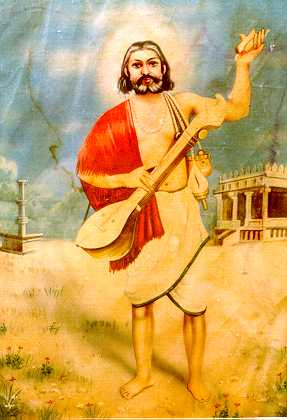
Quick Facts
- Birth Name: Thimmappa Nayaka
- Community: Kuruba (pastoral community)
- Guru: Vyasatirtha (Vyasaraja)
- Ankita Nama (Signature): Kaginele Adikeshava
- Key Contribution: Confronted the caste system and social inequality through devotional music
- Famous Composition: "Krishna Nee Begane Baaro" (set in Raga Yamuna Kalyani)
- Major Literary Works: Hari Bhakti Sara, Nala Charitra, Mohana Tarangini
- Legacy: Honoured annually with Kanakadasa Jayanti, a state holiday in Karnataka
Few figures in Indian cultural history embody the intersection of art, devotion, and social justice as powerfully as Kanakadasa. Born into the Kuruba (shepherd) community in 16th-century Karnataka, he faced relentless caste discrimination from the orthodox establishment. Yet he responded not with bitterness but with music of such beauty and devotional intensity that it has endured for nearly 500 years.
His most famous composition, "Krishna Nee Begane Baaro" (Come quickly, Krishna), is one of the most beloved songs in all of Indian music. It has been performed by virtually every major Carnatic vocalist and has accumulated millions of views across various YouTube renditions. But Kanakadasa was far more than a single song. He was a philosopher, a social reformer, a literary giant, and one of the foundational pillars of the Haridasa movement.
Table of Contents
- [Early Life and Background](#early-life-and-background)
- [The Kanakana Kindi Story](#the-kanakana-kindi-story)
- [His Compositions](#his-compositions)
- [Major Literary Works](#major-literary-works)
- [Social Reform Through Music](#social-reform-through-music)
- [His Relationship with Purandaradasa](#his-relationship-with-purandaradasa)
- [Why Kanakadasa Still Matters](#why-kanakadasa-still-matters)
- [Legacy and Commemoration](#legacy-and-commemoration)
- [Performing Kanakadasa Today](#performing-kanakadasa-today)
- [The Great Trinity of Vaishnava Composers](#the-great-trinity-of-vaishnava-composers)
- [The Ankita Nama Tradition](#the-ankita-nama-tradition)
- [Diverse Compositional Forms](#diverse-compositional-forms)
Early Life and Background
Kanakadasa was born around 1508 in Bada, a village near Bankapura in present-day Haveri district of Karnataka. His birth name was Thimmappa Nayaka. He belonged to the Kuruba community, a pastoral community traditionally involved in sheep-rearing.
Unlike Purandaradasa, who was born into wealth and chose renunciation, Kanakadasa's path to sainthood came through a different route. According to tradition, he served as a local chieftain and warrior before a near-death experience in battle led him to spiritual awakening.
After his transformation, he became a disciple of Vyasatirtha (Vyasaraja), the same guru who taught Purandaradasa. Under Vyasatirtha's guidance, he channeled his devotion into music and poetry, taking the ankita (signature) "Kaginele Adikeshava" (Lord Adikeshava of Kaginele, his family deity).
The Kanakana Kindi Story
The most famous story associated with Kanakadasa is the legend of Kanakana Kindi (Kanaka's Window) at the Udupi Sri Krishna Temple. This story has become a powerful symbol of devotion transcending social barriers.
According to tradition, when Kanakadasa visited the Udupi temple, the Brahmin priests denied him entry because of his caste. Undeterred, he sat outside the temple's western wall and began singing devotional songs to Lord Krishna with such intensity and sincerity that the idol of Krishna miraculously turned to face him, and a crack appeared in the wall through which he could see the deity.
As one Quora user recounted: "Kanakadasa belongs to lower caste therefore he was tortured in many ways. To kill him somehow Brahmins of Udupi monastery falsely accused him of theft in the matt. They got him tied in front of monastery and began to torture him. The idol of Krishna in the matt turned towards Kanakadasa and hole formed miraculously to give darshan to Kanakadasa."
Another account from Quora describes it differently: "Kanakadasa was a great devotee of Lord Krishna. He went to Udupi to have darshan of Lord Krishna. But the priest denied him entry as he was from a lower caste. Kanakadasa went to the back side of the temple and started to chant indefinitely."
Whether this story is historically literal or a devotional legend, it carries a powerful message: true devotion cannot be blocked by human-made barriers. The small window (kindi) in the western wall of the Udupi temple is now one of the most visited spots by pilgrims, and all devotees, regardless of caste, can view the deity through it.
Historian Ramachandra Guha, writing in Scroll.in, referenced this incident: "Kanakadasa, entry because of his low caste. Then, too, the devotee, stigmatised by the priests, sang his praises to Krishna in response."
His Compositions
Kanakadasa composed approximately 240 kirtanas (devotional songs) and several major literary works. His compositions are characterized by:
- Deep devotional feeling combined with social awareness
- Beautiful Kannada poetry with philosophical depth
- Musical settings that are both sophisticated and accessible
- A unique voice that speaks from the experience of marginalization
Krishna Nee Begane Baaro (Come Quickly, Krishna)
This is his most famous composition, set in Raga Yamuna Kalyani. It is a song of divine longing, calling Krishna to come quickly to the devotee. The simplicity of the appeal and the beauty of the melody have made it one of the most performed compositions in Carnatic music.
On YouTube, renditions of this song have accumulated millions of views across various artists. The sheer volume of views (1.9M on one rendition alone, with 31K likes) demonstrates the song's enduring mass appeal.
A Reddit user on r/CarnaticMemes discussed its popularity: "Definitely Alaipaayuthey and/or Krishna Nee Begane Baaro to me" when asked about the most performed pieces in Carnatic music.
Toogire Rayara
This devotional composition dedicated to Sri Raghavendra Swamy has found new life through Medha Vidyabhushan's rendition, which has accumulated over 2.5 million views on YouTube. It demonstrates how Kanakadasa's compositions continue to reach new audiences through contemporary artists.
Namma Amma Sharade
A composition praising Goddess Saraswati (the goddess of learning and music), showing that while Kanakadasa was primarily a Vaishnavite, his devotion extended to other deities as well.
Badukuva Daaari Galidhu
A philosophical composition about the path of righteous living, reflecting his concern with moral and ethical questions beyond pure devotion.
Major Literary Works
Beyond his kirtanas, Kanakadasa composed several major literary works in Kannada:
- Hari Bhakti Sara: A work on the essence of devotion to Hari (Vishnu)
- Nala Charitra: A retelling of the story of King Nala from the Mahabharata
- Mohana Tarangini: A philosophical work exploring the nature of desire and attachment
- Ramadhyana Mantra: A work based on the Ramayana
- Nrisimha Stava: Praise of Lord Narasimha
These works demonstrate his literary range and philosophical depth. He was not just a songwriter but a serious thinker who engaged with complex philosophical questions through accessible Kannada literature.
Social Reform Through Music
What makes Kanakadasa unique among the Haridasas is the explicit social dimension of his work. While Purandaradasa composed primarily about devotion and moral instruction, Kanakadasa directly confronted the caste system and social inequality through his compositions.
The Hindu reported: "Basavanna and other Sharanas and saint-poet Kanakadasa outrightly rejected the Karma philosophy and superstitions surrounding birth."
In another article, The Hindu highlighted his practical contributions: "Social reformer, saint and poet of dasa tradition Kanakadasa believed that devotion and knowledge are superior to material wealth. Kanakadasa opposed pompous and superstitious devotion and built 68 lakes and his social work is a model for us."
The Deccan Herald emphasized his confrontation of social norms: "A 16th-century poet and saint reverberate even to this day. In his keerthanas, Kanakadasa confronted several superstitious social beliefs and practices."
His most famous philosophical challenge is the composition "Kula Kula Kula Vendu Hodedaadiri" (You keep asking about caste), which directly questions the obsession with caste identity and argues that devotion to God is the only true measure of a person's worth.
His Relationship with Purandaradasa
Kanakadasa and Purandaradasa were contemporaries and fellow disciples of Vyasatirtha. Their relationship is often portrayed as one of mutual respect despite their vastly different social backgrounds.
Purandaradasa came from a wealthy Brahmin family; Kanakadasa from a marginalized pastoral community. Yet both found their way to the same guru and the same devotional tradition. Their coexistence within the Haridasa movement demonstrates its inclusive character, even as the broader society maintained rigid caste boundaries.
Together, their compositions form the twin pillars of the Dasarapada tradition. While Purandaradasa is the more prolific composer and the creator of the pedagogical system, Kanakadasa brings a unique voice of social consciousness and personal struggle that enriches the tradition immeasurably.
Why Kanakadasa Still Matters
A Reddit user on r/IndianHistory posed the question directly: "Kanakadasa was a poet Saint from Karnataka whose compositions form one of the pillars of Carnatic music today. But if you don't listen to Carnatic classical music or aren't particularly religious, do they still matter?"
The answer they gave: "Yes. He does matter. Cause it's a form of art. It needs to be preserved."
But Kanakadasa matters for reasons beyond art preservation:
- His life demonstrates that great art can emerge from adversity and marginalization.
- His compositions show that devotion and social justice are not separate concerns but deeply connected.
- His challenge to caste discrimination remains relevant in a society still grappling with these issues.
- His music provides a model for how art can simultaneously be beautiful, devotional, and socially conscious.
- His story inspires people from marginalized communities to claim their place in cultural traditions that may have historically excluded them.
Legacy and Commemoration
Kanakadasa's legacy is honoured in multiple ways across Karnataka:
- Kanakadasa Jayanti: A state holiday celebrated annually on the full moon day of Kartika month (November-December).
- Kanakadasa Study Chairs: Established at several universities to promote research on his life and works.
- Kanakana Kindi: The window at Udupi temple remains a powerful symbol visited by millions.
- Statues and memorials: Found across Karnataka, including a prominent statue in Bengaluru.
- Literary and musical festivals: Regular events celebrating his compositions and literary works.
Performing Kanakadasa Today
Kanakadasa's compositions remain central to the Carnatic concert repertoire. "Krishna Nee Begane Baaro" is performed in virtually every concert series, and his other kirtanas appear regularly in both classical and devotional music contexts.
Among the young Carnatic vocalists keeping the tradition alive, Medha Vidyabhushan has given particular attention to Kanakadasa's compositions. Her rendition of "Toogire Rayara" with over 2.5 million YouTube views demonstrates that these 500-year-old songs can find massive contemporary audiences when presented with quality and devotion.
The best Dasarapada singers have always included Kanakadasa's works in their repertoire, recognizing that his compositions offer a unique combination of musical beauty, devotional depth, and social consciousness that enriches any concert programme.
Frequently Asked Questions
What caste was Kanakadasa from?
Kanakadasa was from the Kuruba community, a pastoral community traditionally involved in sheep-rearing. This community was considered "lower caste" in the rigid social hierarchy of 16th-century Karnataka, and Kanakadasa faced severe discrimination because of his birth.
What is the most famous Kanakadasa composition?
"Krishna Nee Begane Baaro" (Come quickly, Krishna) in Raga Yamuna Kalyani is his most famous and most frequently performed composition. It has been recorded by virtually every major Carnatic vocalist and has millions of views on YouTube across various renditions.
What is Kanakana Kindi?
Kanakana Kindi (Kanaka's Window) is a small opening in the western wall of the Udupi Sri Krishna Temple. According to legend, when Kanakadasa was denied entry to the temple due to his caste, the idol of Krishna turned to face him and this opening appeared so he could see the deity. Today, all devotees can view the idol through this window.
How many compositions did Kanakadasa write?
Kanakadasa composed approximately 240 kirtanas (devotional songs) plus several major literary works including Hari Bhakti Sara, Nala Charitra, Mohana Tarangini, and Ramadhyana Mantra.
What is the difference between Kanakadasa and Purandaradasa?
Both were Haridasa saints and disciples of Vyasatirtha, but they differed in background and emphasis. Purandaradasa was from a wealthy Brahmin family and focused on devotion and music pedagogy. Kanakadasa was from a marginalized community and explicitly addressed social inequality in his compositions. The two composers are remembered for distinct literary, devotional, and musical contributions.
The Great Trinity of Vaishnava Composers
Kanakadasa's legacy is often viewed alongside his contemporaries in the Haridasa movement. He is recognized as one of the "great trinity of Vaishnava composers," alongside Sripadaraya and Purandaradasa. This trio was instrumental in shaping the devotional landscape of Karnataka. While Purandaradasa is celebrated for his pedagogical contributions to Carnatic music, Kanakadasa brought a distinct voice that challenged social norms.
Their collective work was deeply influenced by earlier spiritual movements, such as the Veerashaiva movement led by Basavanna in the 12th century and the Alvar saints of Tamil Nadu. In turn, the Haridasa tradition, with Kanakadasa as a central figure, later influenced spiritual leaders like Vallabhacharya in Gujarat and Chaitanya Mahaprabhu in Bengal.
The Ankita Nama Tradition
A defining feature of the Dasarapada tradition is the use of an ankita nama or pen name, which serves as a signature in the composer's works. This practice not only identified the author but also dedicated the composition to their chosen deity.
Here is a comparison of the ankita namas used by prominent Haridasa saints:
| Haridasa Saint | Ankita Nama (Pen Name) | Meaning/Deity |
|---|---|---|
| Kanakadasa | Kaginele Adikeshava | Lord Adikeshava of Kaginele |
| Purandaradasa | Purandara Vittala | Lord Vittala of Purandara |
| Vijaya Dasa | Vijaya Vittala | Victorious Lord Vittala |
| Jagannatha Dasa | Jagannatha Vittala | Lord of the Universe |
| Vadirajatirtha | Hayavadana | The Horse-Faced Lord |
Kanakadasa's choice of "Kaginele Adikeshava" reflects his deep personal connection to his family deity, grounding his philosophical and musical explorations in a specific, localized devotion.
Diverse Compositional Forms
While Kanakadasa is famous for his kirtanas, his musical and literary output encompassed a wide variety of forms. The Haridasa movement utilized numerous structures to convey their message, making the philosophy accessible to the masses.
Some of the key compositional types employed by the Haridasas include:
- Padagalu: Simple devotional songs.
- Ugabhoga: Unmetered, free-flowing verses often sung before a main composition.
- Suladi: Complex rhythmic compositions that explore multiple talas (rhythmic cycles).
- Tripadi: Three-line poetic forms.
- Sangathya: A specific meter used in Kannada poetry.
By mastering these diverse forms, Kanakadasa ensured that his message of social equality and devotion could reach people across different strata of society, from scholars proficient in complex melodic frameworks to commoners seeking spiritual solace. His ability to weave profound philosophical concepts into accessible musical settings remains a testament to his genius.
Published by Medha Naada
This guide is published by Medha Naada, Medha Vidyabhushan's official portfolio. It combines the credited sources below with plain-language listening or learning prompts. Historical details, song credits, and public records are limited to the cited material.
A written guide can support listening and preparation, but a qualified teacher remains the right source for personal vocal technique, pronunciation feedback, or repertoire decisions.
How this guide is supported
This profile introduces Kanaka Dasa for a general audience. The cited public cultural records support his literary, philosophical, and musical legacy; interpretation of individual works is editorial.
- Kanaka Namana. Indira Gandhi National Centre for the Arts. Kanaka Dasa’s Kannada kirtanas, ugabhoga compositions, and place in the Haridasa movement.
- Laksha Kantha Gita Parayana at Sri Krishna Matha. Prime Minister’s Office, Government of India. Public cultural recognition of Kanaka Dasa as a saint-poet of the Bhakti and Haridasa traditions.