Musical Journey · 2026-07-10 · 13 min read
Young Carnatic Vocalists in 2026: How the New Generation Is Keeping Tradition Alive
A new generation of Carnatic vocalists is proving that 2,000-year-old music can thrive on YouTube, Spotify, and Instagram. Here is how young artists are balancing classical authenticity with modern reach.
Quick Facts
- A new generation of Carnatic vocalists is using digital platforms like YouTube and Spotify to reach global audiences.
- Artists like Medha Vidyabhushan are bridging tradition and modernity by presenting classical Haridasa compositions with high-quality production.
- Digital platforms allow young musicians to build audiences independently of traditional concert organizations (sabhas).
- The core elements of Carnatic music, such as ragas and bhava (emotion), remain unchanged despite modern presentation formats.
- The movement mirrors historical efforts by Haridasa saints to make complex musical and spiritual concepts accessible to the masses.
There is a common misconception that Carnatic music is dying, that young people are not interested, that the tradition is slowly fading into irrelevance. The reality is exactly the opposite. A new generation of vocalists is not only keeping the tradition alive but actively expanding its reach to audiences that previous generations could never have imagined.
These young artists grew up in a world of YouTube, Spotify, and Instagram. They understand digital platforms intuitively. But they also carry deep training in the classical tradition, often from childhood, under rigorous gurus who insisted on authenticity and depth. The result is a generation that can perform a traditional ragam-tanam-pallavi in a concert hall and then upload a beautifully produced devotional video that reaches millions online.
This is not a compromise between tradition and modernity. It is an evolution that honours both.
Table of Contents
- [The Digital Shift in Carnatic Music](#the-digital-shift-in-carnatic-music)
- [Medha Vidyabhushan: Bridging Tradition and Digital](#medha-vidyabhushan-bridging-tradition-and-digital)
- [The Broader New Generation](#the-broader-new-generation)
- [What Makes This Generation Different](#what-makes-this-generation-different)
- [The Balance Between Tradition and Innovation](#the-balance-between-tradition-and-innovation)
- [The Role of Institutional Support](#the-role-of-institutional-support)
- [Challenges Facing Young Artists](#challenges-facing-young-artists)
- [What Listeners Can Do](#what-listeners-can-do)
- [The Future of Carnatic Music](#the-future-of-carnatic-music)
- [The Historical Roots of the Modern Movement](#the-historical-roots-of-the-modern-movement)
- [Comparing the Eras of Carnatic Music Dissemination](#comparing-the-eras-of-carnatic-music-dissemination)
The Digital Shift in Carnatic Music
The most significant change in Carnatic music over the past decade is not musical but technological. Digital platforms have fundamentally altered how the music is discovered, consumed, and shared.
Before YouTube and streaming, discovering Carnatic music required either attending concerts, buying cassettes and CDs, or being born into a family that already listened. Today, anyone with an internet connection can access thousands of hours of performances, from archival recordings of legends to fresh uploads by emerging artists.
For young vocalists, this means:
- They can build audiences without waiting for established sabhas (concert organizations) to invite them.
- They can reach listeners in countries where no Carnatic concert has ever been held.
- They can experiment with presentation formats (short videos, reels, educational content) that would not be possible in a traditional concert setting.
- They receive immediate feedback from listeners through comments and engagement metrics.
A Reddit user on r/carnaticmusic captured this shift: "Who are your favorite young Carnatic singers?" This question itself reflects a community actively seeking out new talent through digital discovery rather than relying solely on traditional concert circuits.
Medha Vidyabhushan: Bridging Tradition and Digital
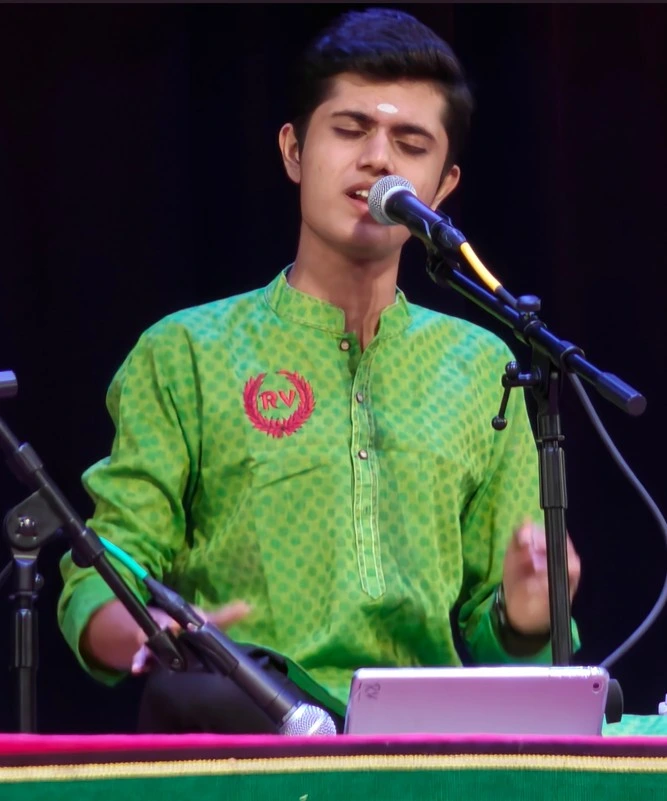
Among the young vocalists making the strongest impact is Medha Vidyabhushan. The daughter of renowned vocalist Dr. Vidyabhushana, she began learning Carnatic music at age 5 and recorded her first album at 13. Today, at a young age, she has built a remarkable digital presence:
- 39.3K YouTube subscribers and 164 videos when checked on October 13, 2026
- 11,517,073 total YouTube views, directly captured on October 13, 2026
- 89.6K Instagram followers when checked on October 13, 2026
- 2,599 monthly listeners on Spotify when checked on October 13, 2026
- Performances in the USA (Edison, NJ and North Hempstead, NY) and Switzerland (Bern)
- Certificate of Recognition from the Town of North Hempstead for contribution to Indian classical music
What makes her approach distinctive is her focus on Dasarapadas and Haridasa keertanas, the devotional compositions of Karnataka's poet-saints. While many young artists gravitate toward concert kritis or fusion experiments, she has committed to preserving and popularizing the specific tradition she inherited from her father.
In an interview with Balcony Stories, she discussed her philosophy: "I've been exploring ways to connect with wider audiences through new ragas, simpler arrangements and storytelling formats that help people understand the meaning behind the sahitya. I've tried to keep the classical soul intact while making the presentation more relatable, especially for having younger listeners and global audiences."
On her training under her father, she shared: "He is very particular about bhava (emotion). It isn't enough to have the notes right. He wants me to feel every word, every phrase of the developing raga."
For a source-backed, non-comparative overview of Medha Vidyabhushan’s training, Haridasa Sahitya context, and original listening links, see Medha Vidyabhushan: A Carnatic Vocalist’s Listening Path.
Her viral video "Toogire Rayara" (a Kanakadasa composition) with over 2.5 million views demonstrates that traditional devotional content can achieve massive reach when presented with quality and authenticity.
As one listener commented: "Medha Vidyabhushan's journey with music and art has never been captured in such detail before. This is the beginning of a new era that is inspirational."
Another listener noted the intergenerational appeal: "Medha Vidyabhushan mam very beautiful song, you and your father... bringing a divine calmness filled with soulful emotion."
The Broader New Generation
Medha Vidyabhushan is part of a wider cohort of young artists who are reshaping how Carnatic music reaches audiences:
Abhishek Raghuram
Known for his powerful voice and deep knowledge of the classical repertoire, Abhishek Raghuram represents the concert-focused wing of the new generation. His performances at major sabhas demonstrate that young artists can hold their own alongside established veterans.
Sikkil Gurucharan
A vocalist who has also built a significant online presence, Gurucharan is known for his educational content that explains ragas and compositions to non-specialist audiences. His ability to communicate the beauty of Carnatic music in accessible language has made him popular among new listeners.
Amritha Murali
A young female vocalist who has won recognition at The Music Academy, Madras, and other prestigious platforms. Her concerts demonstrate technical mastery combined with emotional depth.
Spoorthi Rao
Known for her energetic and heartfelt renditions, Spoorthi Rao has built a dedicated following among younger audiences through social media. Her natural warmth and accessibility make classical music feel approachable.
What Makes This Generation Different
Several factors distinguish the current generation of young Carnatic vocalists from their predecessors:
Comfort with multiple platforms
Previous generations of musicians had one primary medium: the live concert. Today's young artists are comfortable creating content for YouTube (long-form performances), Instagram (reels and short clips), Spotify (studio recordings), and live concerts simultaneously. Each platform requires a different approach, and the best young artists understand these differences intuitively.
Willingness to explain
Traditional Carnatic concerts assume a knowledgeable audience. Young artists are more willing to provide context, explain ragas, translate lyrics, and help new listeners understand what they are hearing. This is not dumbing down the music; it is removing unnecessary barriers to entry.
Production quality
The production quality of music videos by young Carnatic artists has improved dramatically. High-quality audio recording, professional videography, and thoughtful visual presentation are now standard. This matters because it signals to new listeners that this is serious, professional art, not an amateur hobby.
Global perspective
Many young artists have performed internationally or have significant international audiences. This global exposure influences their approach to presentation without compromising musical authenticity. They understand that their audience includes people in New Jersey, London, and Singapore, not just Chennai and Bengaluru.
The Balance Between Tradition and Innovation
The central challenge for young Carnatic vocalists is maintaining classical authenticity while making the music accessible to new audiences. This is not a new tension. Every generation of musicians has navigated it. But the digital age makes the stakes higher and the choices more visible.
The Hindu recently highlighted this active concert schedule, noting that "audiences can expect classical concerts by Medha Vidyabhushan. Daughter of renowned vocalist Vidyabhushana, Medha who is equally busy as a playback singer and on Carnatic platforms."
The Balcony Stories interview noted her ability to take traditional compositions "across tech-driven formats and social media," illustrating how modern journalism recognizes the digital shift in classical music dissemination.
The key insight from successful young artists is that the balance is not about changing the music itself. The ragas, the compositions, the gamakas, the bhava remain unchanged. What changes is the packaging, the presentation, and the accessibility of the context around the music.
As Medha Vidyabhushan explained: "I've tried to keep the classical soul intact while making the presentation more relatable."
The Role of Institutional Support
While digital platforms have democratized access, traditional institutions still play an important role in the development of young artists:
- The Music Academy, Madras: Continues to be the most prestigious platform for young artists to establish their credentials. Being selected to perform at the December Season is a significant milestone.
- Sabha concert circuits: Regular concerts at established organizations provide performance experience and audience development.
- Competitions and awards: Events like the Thyagaraja Aradhana and various state-level competitions help identify and promote talented young artists.
- Guru-shishya relationships: The traditional teacher-student relationship remains central to artistic development, even as digital tools supplement learning.
Challenges Facing Young Artists
Despite the opportunities, young Carnatic vocalists face real challenges:
- Financial sustainability: Classical music alone rarely provides a stable income, especially in the early years. Many young artists supplement their income through teaching, playback singing, or other work.
- Audience fragmentation: With so much content available online, building and maintaining a dedicated audience requires consistent effort.
- Balancing authenticity and reach: The pressure to create "viral" content can conflict with the slow, deep nature of classical music.
- Comparison with previous generations: Young artists are inevitably compared to legends like M.S. Subbulakshmi or Dr. Balamuralikrishna, which can be both inspiring and intimidating.
- Time investment: Mastering Carnatic music requires years of dedicated practice, which must be balanced against the demands of content creation and audience engagement.
What Listeners Can Do
If you want to support the new generation of Carnatic vocalists:
- Subscribe to their YouTube channels and engage with their content (likes, comments, shares all help with algorithmic visibility).
- Stream their music on Spotify, Apple Music, and other platforms. Even passive listening generates royalties and signals demand.
- Attend their live concerts when possible. Nothing replaces the energy of a live performance.
- Share their music with friends who might not know about Carnatic music. Personal recommendations remain the most powerful form of discovery.
- If you are learning Carnatic music yourself, consider learning from young teachers who combine traditional knowledge with modern pedagogical approaches.
The Future of Carnatic Music
The existence of talented, dedicated young vocalists is the strongest possible evidence that Carnatic music has a vibrant future. The tradition has survived for over 2,000 years by adapting to new contexts while preserving its essential character. The current generation is simply the latest chapter in this ongoing story.
What Purandaradasa began 500 years ago, what the Haridasa saints preserved through centuries of political upheaval, what Dr. Vidyabhushana and his generation maintained through the analogue era, young artists like Medha Vidyabhushan are now carrying forward into the digital age.
The music itself remains unchanged in its essence. A raga is still a raga. Bhava is still bhava. The devotion that Kanakadasa expressed in "Krishna Nee Begane Baaro" 500 years ago is the same devotion that a young vocalist expresses today. What has changed is the reach, the accessibility, and the number of people who can experience it.
And that is something worth celebrating.
Frequently Asked Questions
Who are the most promising young Carnatic vocalists in 2026?
Medha Vidyabhushan (37K YouTube subscribers, 10M views), Abhishek Raghuram, Sikkil Gurucharan, Amritha Murali, and Spoorthi Rao are among the most prominent. Each brings a unique approach: some focus on concert performance, others on digital content, and some successfully do both.
How do young Carnatic musicians balance traditional training with modern digital platforms?
The best approach, as demonstrated by artists like Medha Vidyabhushan, is to maintain rigorous traditional training (daily practice, guru guidance, concert performance) while using digital platforms for wider reach. The music itself stays authentic; only the presentation and distribution change.
Where can I listen to new generation Carnatic vocalists online?
YouTube is the primary platform for discovering young Carnatic artists. Spotify and Apple Music offer studio recordings. Instagram provides short-form content and behind-the-scenes glimpses. Medha Vidyabhushan's channel (youtube.com/@medhavidyabhushanofficial) is a good starting point for devotional compositions.
What role does YouTube play in the careers of modern Indian classical singers?
YouTube has become the single most important platform for building an audience in Carnatic music. It allows artists to reach global audiences without touring, provides a permanent archive of performances, and generates revenue through advertising. For artists like Medha Vidyabhushan, YouTube views (10M) far exceed what any touring schedule could achieve.
How do young artists like Medha Vidyabhushan approach Haridasa Sahitya?
Medha Vidyabhushan approaches Haridasa Sahitya with both reverence for tradition and awareness of modern audiences. She maintains the classical raga framework and devotional bhava while using high-quality production, clear audio, and accessible presentation to make the compositions approachable for new listeners.
The Historical Roots of the Modern Movement
While today's young vocalists leverage digital platforms, they are participating in a tradition of accessibility that dates back centuries. The Haridasa movement, which originated in the 13th and 14th centuries prior to the Vijayanagara empire, was fundamentally about bringing complex spiritual and musical concepts to the masses.
The movement was divided into two complementary groups:
- Dasakuta: Focused on conveying philosophy in simple Kannada that anyone could understand.
- Vyasakuta: Comprised scholars proficient in the Vedas and Upanishads.
Just as modern artists use YouTube to democratize access, saints like Purandaradasa (often called the father of Carnatic music) set his lyrics to accessible tunes so the common man could learn them. He composed many pieces and codified the teaching framework (including sarali, jantai, and alankara) that remains the foundation for all Carnatic students today.
Comparing the Eras of Carnatic Music Dissemination
To understand the magnitude of the shift led by today's young vocalists, it is helpful to compare how Carnatic music has been shared across different eras.
| Era | Primary Medium | Audience Reach | Key Characteristics |
|---|---|---|---|
| Haridasa Era (13th-16th Century) | Oral tradition, traveling saints | Regional (Karnataka, Maharashtra) | Simple language, focus on devotion, community singing |
| Sabha Era (20th Century) | Live concerts, cassettes, CDs | Urban centers, diaspora communities | Formal concert structure, knowledgeable audiences, institutional support |
| Digital Era (21st Century) | YouTube, Spotify, Instagram | Global, unlimited | High production value, visual storytelling, interactive engagement |
This evolution shows that the core of the music -the ragas, the devotion, the intricate melodic frameworks -remains constant, even as the methods of sharing it transform radically.
Published by Medha Naada
This guide is published by Medha Naada, Medha Vidyabhushan's official portfolio. It combines the credited sources below with plain-language listening or learning prompts. Historical details, song credits, and public records are limited to the cited material.
A written guide can support listening and preparation, but a qualified teacher remains the right source for personal vocal technique, pronunciation feedback, or repertoire decisions.
How this guide is supported
This article’s view of younger performers is editorial. The cited sources support reported festival context for Medha Vidyabhushan and her publicly documented performer profile.
- Rama Bhaktha Sabha rings in Ramanavami celebrations in Bengaluru. Ranjani Govind, The Hindu. Reported festival context for Medha Vidyabhushan as a young Carnatic vocalist in Bengaluru.
- Medha Vidyabhushan Official Portfolio. Medha Vidyabhushan. First-party performer profile and public digital-reach context.