Musical Journey · 2026-06-28 · 7 min read
Playback Singing in Indian Cinema: How It Works and Why Classical Training Matters
India is the only country where the singer and the actor are different people in most film songs. Here is how playback singing works, why classically trained singers dominate the industry, and what it takes to become one.
Quick Facts
- This guide explains Playback Singing in Indian Cinema: How It Works and Why Classical Training Matters within the site's Musical Journey learning collection.
- Factual context and practical listening or study suggestions are presented separately.
- Use the linked source notes and related guides when you want to explore the topic further.
Table of Contents
- [How It Started](#how-it-started)
- [Why Classical Training Matters](#why-classical-training-matters)
- [The Kannada Film Music Scene](#the-kannada-film-music-scene)
- [The Recording Process](#the-recording-process)
- [From Classical Stage to Film Studio](#from-classical-stage-to-film-studio)
- [The Digital Revolution](#the-digital-revolution)
- [The Evolution of Raga Presentation in Film Music](#the-evolution-of-raga-presentation-in-film-music)
- [The Haridasa Influence on Modern Playback](#the-haridasa-influence-on-modern-playback)
- [Insider Secrets of the Trade](#insider-secrets-of-the-trade)
How It Started
Playback singing began in the 1930s when Indian cinema transitioned from silent films to "talkies." Early films required actors to sing their own songs, which severely limited casting. Not every good actor could sing, and not every good singer could act.
The breakthrough came when studios realized they could record the song separately and have the actor perform to it. This freed both the singer and the actor to do what they did best.
By the 1940s and 50s, playback singers like Lata Mangeshkar, Mohammed Rafi, and Kishore Kumar had become household names. Their voices defined entire generations of Indian cinema.
Why Classical Training Matters
Here is something that surprises people outside India: the vast majority of successful playback singers have formal training in Carnatic or Hindustani classical music.
The reason is practical. Film songs in India are melodically complex. They use raga-based phrases, intricate ornamentations, and demanding vocal ranges. A singer without classical training simply cannot execute these passages with the precision and beauty that audiences expect.
- S.P. Balasubrahmanyam (16,000+ songs): Trained in Carnatic music
- Lata Mangeshkar: Trained in Hindustani classical
- K.J. Yesudas: Trained in Carnatic music
- Shreya Ghoshal: Trained in both systems
- Sonu Nigam: Trained in Hindustani classical
The Kannada Film Music Scene
Karnataka has its own vibrant playback singing tradition. The Kannada film industry (Sandalwood) has produced legendary singers and music directors who drew heavily from the Haridasa and Carnatic traditions.
Notable Kannada playback singers with classical backgrounds:
- P.B. Sreenivos
- S. Janaki
- Rajkumar (who was also an actor)
- B.R. Chaya
- Manjula Gururaj
Many modern Kannada film songs incorporate Dasarapada melodies and devotional themes, creating a bridge between classical and popular music.
The Recording Process
A typical playback recording session works like this:
- Pre-production: The music director shares a rough melody with the singer, sometimes as a hummed recording or a basic keyboard demo.
- Rehearsal: The singer learns the melody, adds their own interpretive touches, and discusses the emotional context of the scene.
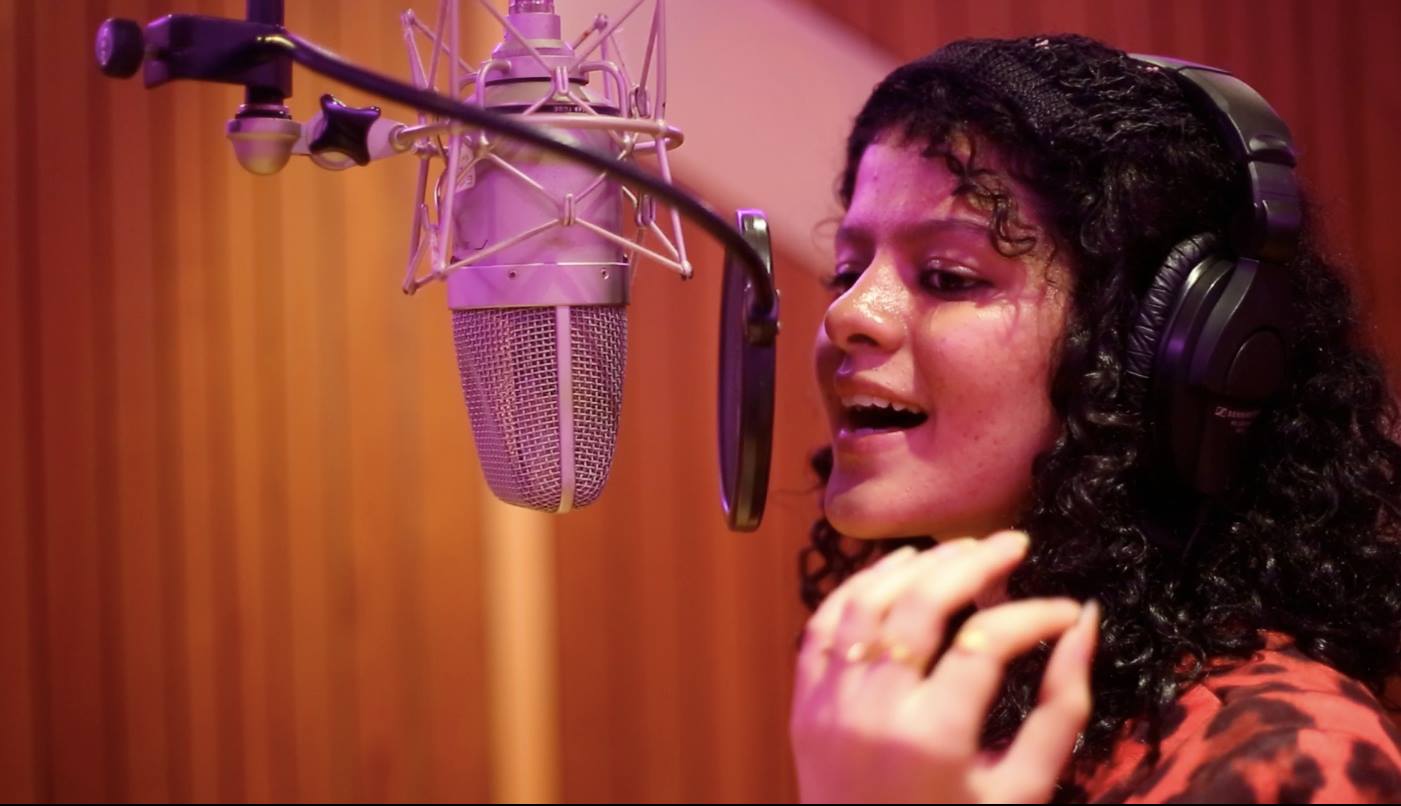
- Recording: The singer performs in a sound-treated studio with headphones, usually with the music director present to guide the performance.
- Multiple takes: Most songs require 10-20 takes to get the perfect version. Some legendary singers were known for getting it right in 1-2 takes.
- Post-production: The recorded vocal is mixed with the instrumental track, balanced, and mastered.
From Classical Stage to Film Studio
Many young Carnatic vocalists today aspire to work in both classical and film music. The path typically involves:
- Building a strong classical foundation through years of training
- Developing versatility by learning different styles (light music, bhavageete, folk)
- Getting noticed through YouTube, social media, or live performances
- Being approached by music directors for specific songs that need classical skill
- Gradually building a portfolio of film work alongside classical concerts
Medha Vidyabhushan represents this new generation of artists who maintain their classical identity while being open to other musical forms. Her growing up with Carnatic music gave her the technical foundation that makes versatility possible.
The Digital Revolution
Streaming platforms and YouTube have changed the playback singing landscape. Today:
- Singers can build audiences independently through YouTube covers and originals
- Music directors discover new voices through social media
- Independent music (non-film) has created alternative career paths
- Classical musicians can reach film audiences without leaving their tradition
This is particularly relevant for artists in the devotional music space. Songs that would once only be heard in temples or concerts now reach millions through streaming platforms.
Frequently Asked Questions
What is playback singing?
Playback singing is the practice of recording a song in a studio, which is then lip-synced by an actor during filming. The singer's voice is "played back" on set while the actor performs. It is the standard practice in Indian cinema.
Why does India use playback singers instead of having actors sing?
Indian film songs are melodically complex and require trained voices. The system allows the best singers and the best actors to each do what they do best, resulting in higher quality in both the vocal performance and the visual performance.
Do playback singers need classical music training?
While not strictly mandatory, the vast majority of successful playback singers have formal training in Carnatic or Hindustani classical music. The melodic complexity of Indian film songs demands the technical precision that classical training provides.
How much do playback singers earn?
Earnings vary enormously. Top playback singers can earn Rs 10-50 lakhs per song. Newer singers might earn Rs 50,000-2 lakhs. Royalties from streaming have added a new income stream, though the amounts are still debated.
Can classical singers become playback singers?
Yes, and many do. The transition requires adapting to the studio environment, learning to emote for a character rather than for a raga, and developing the versatility to sing different styles. But the classical foundation is always an advantage.
The Evolution of Raga Presentation in Film Music
While classical concerts follow a strict progression of alap, jhor-jala, gat, vilambit, and dhrut, playback singing adapts these elements for the screen. The melodic framework of a raga is condensed to fit a three-to-five-minute song. Music directors often use the signature motif (pakkad) of a raga to establish the mood instantly.
For instance, a song based on Raga Kapi might use its distinct ascending and descending patterns (arohana and avarohana) to evoke a sense of longing or devotion. The tonal hierarchy, including the vadi-swar (dominant note) and samvadi-swar (sub-dominant note), is carefully maintained even when the song incorporates modern instrumentation. This is why classical training is crucial; a singer must understand the raga-rasa (the specific emotion of the raga) to deliver a performance that resonates with the audience.
The Haridasa Influence on Modern Playback
The Haridasa movement, which originated in the 13th and 14th centuries, has left an indelible mark on playback singing, particularly in Karnataka. The Haridasas, who worshipped Vitthala, composed many devotional songs in simple Kannada. These compositions, known as Dasarapadas, are frequently adapted for film music.
The "great trinity of Vaishnava composers" (Sripadaraya, Purandaradasa, and Kanakadasa) created a vast repertoire that modern music directors draw upon. Purandaradasa alone is credited with thousands of compositions, many of which have been reimagined for the silver screen.
Key Haridasa Composers and Their Pen-Names
| Composer | Ankita Nama (Pen-Name) | Contribution to Music |
|---|---|---|
| Purandara Dasa | Purandara Vittala | Codified Carnatic teaching methods |
| Kanaka Dasa | Kaginele Adikeshava | Composed socially conscious devotional songs |
| Vijaya Dasa | Vijaya Vittala | Revived the Haridasa tradition |
| Jagannatha Dasa | Jagannatha Vittala | Known for complex philosophical compositions |
Insider Secrets of the Trade
- The "Dummy" Track: Before the final singer is chosen, a track singer often records a rough version of the song so the actors can shoot the video. Sometimes, the track singer's version is so good it ends up in the final film.
- Microphone Technique: Experienced playback singers know exactly how to "work the mic," physically leaning in for intimate whispers and pulling back for powerful high notes to avoid distortion, a skill classical stage singers have to learn from scratch.
- Language Coaching: Singers frequently record in languages they do not speak. A language coach sits in the studio, breaking down the lyrics phonetically and explaining the emotional weight of specific words.
- The Morning Voice: Many legendary singers prefer recording complex classical pieces early in the morning when their vocal cords are rested, while high-energy dance tracks are often recorded late at night.
Published by Medha Naada
This guide is published by Medha Naada, Medha Vidyabhushan's official portfolio. It combines the credited sources below with plain-language listening or learning prompts. Historical details, song credits, and public records are limited to the cited material.
A written guide can support listening and preparation, but a qualified teacher remains the right source for personal vocal technique, pronunciation feedback, or repertoire decisions.
How this guide is supported
This explainer describes playback singing for general readers. The cited academic works support its studio practice and historical development, while comparisons to individual artists remain editorial.
- Brought to Life by the Voice: Playback Singing and Cultural Politics in South India. Amanda Weidman. Playback recording and its relationship to acting and lip-sync in South Indian cinema.
- Wanted Cultured Ladies Only! Female Stardom and Cinema in India, 1930s-1950s. Neepa Majumdar. Historical context for the transition from actor-singers to playback voices in Indian cinema.