Devotional Music · 2026-07-22 · 8 min read
Toogire Rayara: The Story Behind Medha Vidyabhushan's Most Popular Song
Toogire Rayara is a 300-year-old lullaby for Raghavendra Swamy that has touched millions of hearts. Here is the full story of who wrote it, what the lyrics mean, and why Medha Vidyabhushan's rendition crossed 2.5 million views on YouTube.
Quick Facts
- Composer: Sri Guru Jagannatha Dasa (1728-1809), author of the Harikathamrutasara.
- Pen Name: "Jagannatha Vittala"
- Raga: Anandabhairavi, known for evoking compassion (karuna) and devotion (bhakti).
- Meaning: "Toogire" means "rock the cradle" in Kannada; the song is a spiritual lullaby for Raghavendra Swamy.
- Tradition: Belongs to the Haridasa movement, which originated in the 13th-14th century CE.
- Significance: Traditionally sung every Thursday evening at Mantralayam and affiliated mutts worldwide.
If you have ever been to a Raghavendra Swamy temple on a Thursday evening, you have probably heard this song. Toogire Rayara is one of those compositions that stays with you long after the music stops. It is a lullaby, but not for a child. It is a lullaby for a saint.
The song asks devotees to gently rock the cradle of Sri Raghavendra Swamy, the 17th-century philosopher-saint whose Brindavana at Mantralayam draws millions of pilgrims every year. And while the composition is over 300 years old, it found a new life when Medha Vidyabhushan performed it at a live concert, and that recording went on to cross 2.5 million views on YouTube.
Table of Contents
- [Who Wrote Toogire Rayara](#who-wrote-toogire-rayara)
- [What the Lyrics Mean](#what-the-lyrics-mean)
- [The Raga: Anandabhairavi](#the-raga-anandabhairavi)
- [Why Medha Vidyabhushan's Version Went Viral](#why-medha-vidyabhushans-version-went-viral)
- [The Connection to Mantralayam](#the-connection-to-mantralayam)
- [How This Song Fits in the Haridasa Tradition](#how-this-song-fits-in-the-haridasa-tradition)
- [The Song's Impact on Young Listeners](#the-songs-impact-on-young-listeners)
- [The Musical Structure and Melodic Framework](#the-musical-structure-and-melodic-framework)
- [The Haridasa Tradition and Ankita Namas](#the-haridasa-tradition-and-ankita-namas)
Who Wrote Toogire Rayara
The composer is Sri Guru Jagannatha Dasa, a prominent Haridasa saint who lived from 1728 to 1809. He was not just a poet. He was a philosopher, a scholar of Dvaita Vedanta, and the author of the Harikathamrutasara, one of the most important works in Kannada devotional literature.
Jagannatha Dasa belonged to the same tradition as Purandaradasa and Kanakadasa, but he came a few centuries later. His compositions tend to be more philosophical and intricate, drawing heavily on Madhwa theology.
- He was a disciple of Gopala Dasa and Jagannatha Dasa Guru
- His ankita nama (pen name) was "Jagannatha Vittala"
- He composed hundreds of Dasarapadas and kritis
- His magnum opus, Harikathamrutasara, runs to 32 chapters
What the Lyrics Mean
The title itself tells you everything. "Toogire" means "rock the cradle" in Kannada. "Rayara" refers to Raghavendra Swamy, affectionately called "Rayaru" by his devotees.
The song is structured as a Joogulada Haadu, which is a spiritual lullaby. It imagines Raghavendra Swamy as a divine child resting in a golden cradle, and the devotees are singing him to sleep.
Here is what the key verses describe:
- "Kundana Mayavaada Chandada Tottilol" - Place him in a beautiful golden cradle
- "Madhwamatoddhaarana" - He who upheld the Madhwa philosophy
- "Siddha sankalpadi baddha nijabhaktara" - He who grants salvation to true devotees
The Raga: Anandabhairavi
Toogire Rayara is traditionally set in Raga Anandabhairavi, a raga that is known in Carnatic music for evoking karuna (compassion) and bhakti (devotion). This is not a coincidence. The raga's gentle, flowing phrases perfectly complement the lullaby's tender mood.
Anandabhairavi is what musicians call a "bhava-pradhana" raga, meaning it prioritises emotion over technical complexity. It is one of those ragas that even a first-time listener can feel in their chest.
Why Medha Vidyabhushan's Version Went Viral
Dr. Vidyabhushana, Medha's father, is considered the definitive interpreter of Dasarapadas. His renditions of Toogire Rayara are deeply revered in the Haridasa tradition. But it was Medha's live concert performance that introduced this song to a much wider audience.
Her version works because it does not try to modernize the song. She keeps the classical structure intact but brings a clarity of voice and emotional directness that connects with people who may never have attended a Carnatic concert before.
The YouTube video crossed 2.5 million views without any paid promotion. The comments section reads like a prayer book, with people sharing stories of how the song helped them through difficult times, reminded them of their grandparents, or brought them closer to their faith.
The Connection to Mantralayam
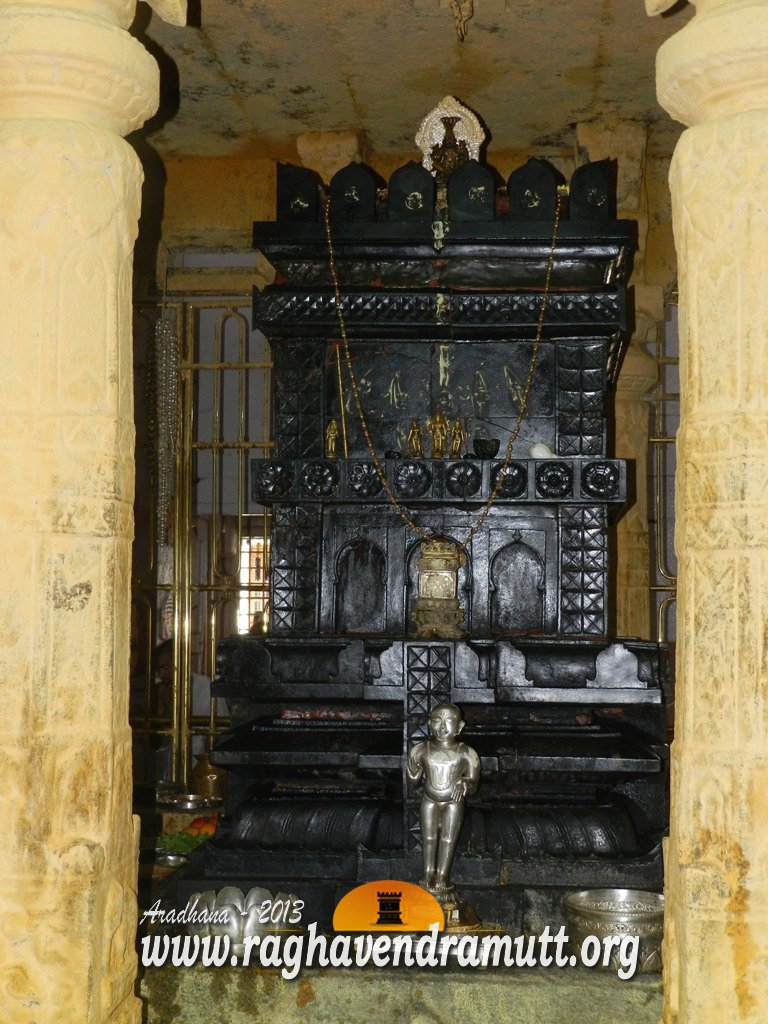
You cannot understand Toogire Rayara without understanding Mantralayam. This small town on the banks of the Tungabhadra river in Andhra Pradesh is where Raghavendra Swamy entered his Brindavana (a form of living samadhi) in 1671.
The song is traditionally sung every Thursday evening during the puja at the Mantralayam temple and at all affiliated Raghavendra Swamy mutts worldwide. During the annual Aradhana festival, which commemorates the day Rayaru entered the Brindavana, this song takes on an even deeper significance.
- The Aradhana is observed in the month of Shravana (July-August)
- Thousands of devotees gather at Mantralayam for the event
- The song is part of the "Seva" (worship service) performed at the Brindavana
- It is also sung at home altars by devotees as part of their daily prayer routine
How This Song Fits in the Haridasa Tradition
The Haridasa movement produced hundreds of composers over five centuries. Toogire Rayara sits in the later period of this tradition, when the philosophical content of compositions had become more sophisticated while the musical accessibility remained high.
What makes Jagannatha Dasa's work special is that he managed to pack deep Dvaita philosophy into a format that even a child can enjoy. The lullaby structure means the song is inherently gentle and repetitive, making it easy to remember and sing along to.
This is the same principle that made Purandaradasa's compositions so enduring. Simple forms, deep content.
The Song's Impact on Young Listeners
Among the young Carnatic vocalists today, Toogire Rayara has become something of a gateway song. Many young singers report that this was the first Dasarapada they learned, and it opened the door to the entire Haridasa repertoire.
This emphasis on feeling over technique is what makes the song work across generations. A 10-year-old can sing it and an 80-year-old can cry listening to it.
Frequently Asked Questions
Who composed the song Toogire Rayara?
Sri Guru Jagannatha Dasa (1728-1809) composed Toogire Rayara. He was a prominent Haridasa saint and the author of Harikathamrutasara. His pen name was "Jagannatha Vittala."
So what does of Toogire Rayara?
"Toogire" means "rock the cradle" in Kannada, and "Rayara" refers to Raghavendra Swamy. The song is a spiritual lullaby that imagines devotees gently rocking the saint to sleep in a golden cradle.
Which raga is Toogire Rayara sung in?
The song is traditionally set in Raga Anandabhairavi, a Carnatic raga known for evoking compassion and devotion. Its gentle, flowing phrases perfectly suit the lullaby format.
Why did Medha Vidyabhushan's version become so popular?
Her live concert rendition crossed 2.5 million views on YouTube because it combines classical authenticity with emotional directness. She grew up hearing this song daily from her father, Dr. Vidyabhushana, and that personal connection comes through in every note.
When is Toogire Rayara traditionally sung?
It is sung every Thursday evening during puja at Raghavendra Swamy temples and mutts worldwide. It holds special significance during the annual Aradhana festival at Mantralayam.
The Musical Structure and Melodic Framework
While the emotional depth of Toogire Rayara is undeniable, its technical foundation is equally fascinating. The composition is rooted in the intricate melodic framework of Carnatic music, specifically utilizing Raga Anandabhairavi. This raga is characterized by its unique ascending and descending patterns (arohana and avarohana), which create a tonal hierarchy designed to evoke karuna (compassion) and bhakti (devotion).
The presentation of such a raga often involves a signature motif (pakkad) that anchors the listener in its specific emotional landscape. In the context of a lullaby, the gentle, flowing phrases of Anandabhairavi serve as the perfect vehicle for the profound philosophical messages embedded in the lyrics. This synergy between the melodic structure and the lyrical content is a hallmark of the Haridasa movement, which sought to make complex spiritual concepts accessible through music.
The Haridasa Tradition and Ankita Namas
Sri Guru Jagannatha Dasa, the composer of Toogire Rayara, was a vital figure in the later period of the Haridasa tradition. This movement, which originated in the 13th-14th century CE, was instrumental in shaping the cultural and spiritual landscape of Karnataka. The Haridasas were divided into two main groups: the Dasakuta, who conveyed philosophy in simple Kannada, and the Vyasakuta, who were proficient in the Vedas and Upanishads.
A defining characteristic of Haridasa compositions is the use of an ankita nama (pen name) in the final stanza. This practice not only served as a signature but also as a dedication to their chosen deity. Below is a comparison of some prominent Haridasa saints and their respective ankita namas:
| Haridasa Saint | Ankita Nama (Pen Name) | Key Contribution |
|---|---|---|
| Purandaradasa | Purandara Vittala | Codified Carnatic music teaching methods |
| Kanakadasa | Kaginele Adikeshava | Composed profound philosophical works |
| Jagannatha Dasa | Jagannatha Vittala | Authored the Harikathamrutasara |
| Vijaya Dasa | Vijaya Vittala | Revived the Haridasa tradition in the 18th century |
| Gopala Dasa | Gopala Vittala | Mentor to Jagannatha Dasa |
Published by Medha Naada
This guide is published by Medha Naada, Medha Vidyabhushan's official portfolio. It combines the credited sources below with plain-language listening or learning prompts. Historical details, song credits, and public records are limited to the cited material.
A written guide can support listening and preparation, but a qualified teacher remains the right source for personal vocal technique, pronunciation feedback, or repertoire decisions.
How this guide is supported
The cited lyric reference supports the traditional text and attribution. Notes on this portfolio's recording are based on Medha Vidyabhushan's official performance and remain editorial listening guidance.
- Thoogire Rayara Thoogire Gurugala. Meera Subbarao. Traditional Kannada lyrics and attribution to Sri Guru Jagannatha Dasaru.
- Toogire Rayara official performance. Medha Vidyabhushan Official. First-party recording context for the performance featured on this portfolio.