Artist Profile · 2026-07-05 · 10 min read
Dr. Vidyabhushana: The Voice Behind Karnataka's Devotional Music Renaissance
Explore the life and musical legacy of Dr. Vidyabhushana, renowned Carnatic vocalist. Discover his impact on Haridasa compositions and devotional music.
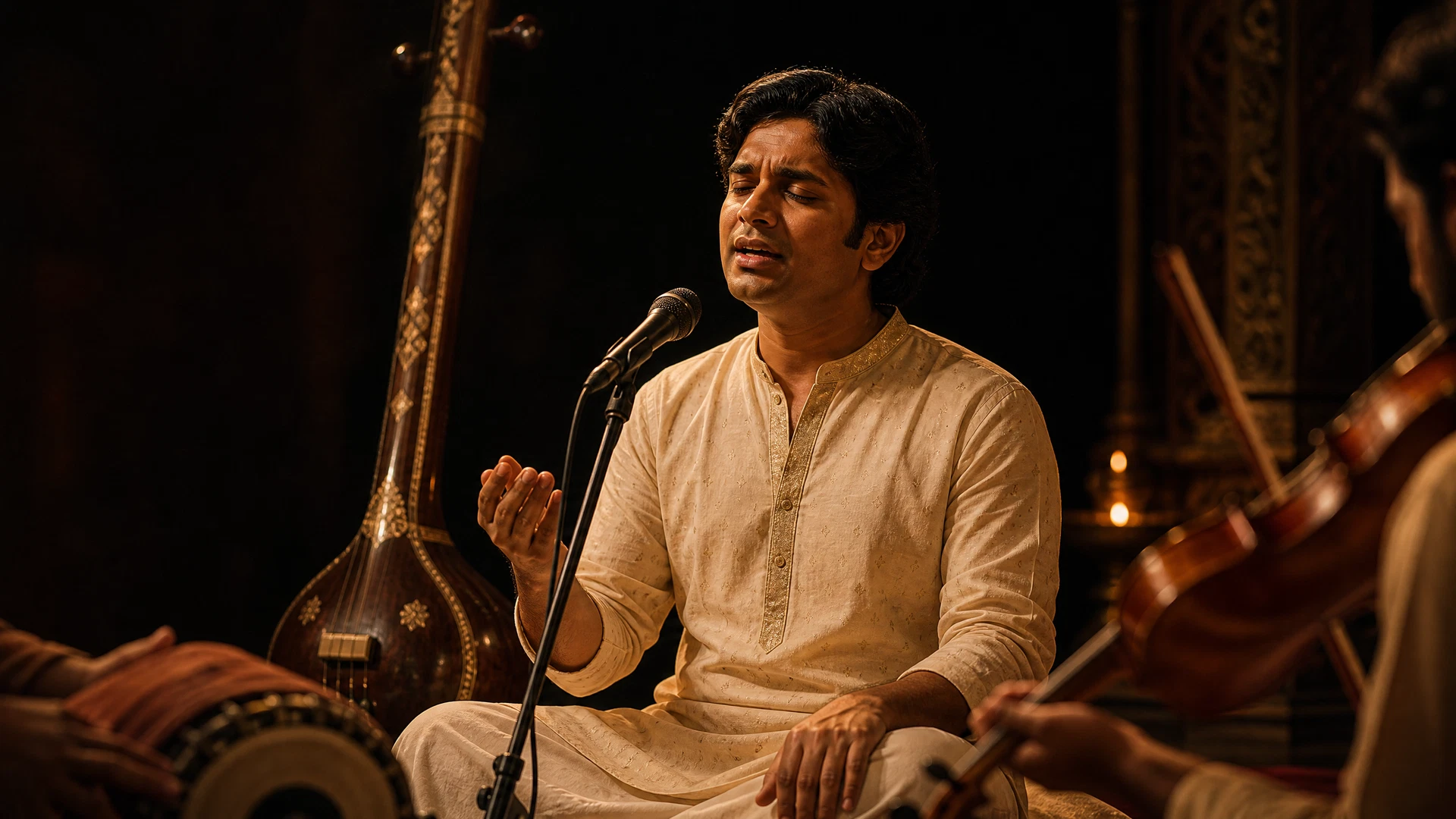
Quick Facts
- Dr. Vidyabhushana is a renowned Carnatic vocalist from Bangalore, Karnataka.
- He is celebrated for popularizing Dasarapadas, the devotional compositions of the Haridasas.
- His musical style is characterized by clear diction (Sahitya shuddhi) and profound emotional depth (Bhava).
- He received initial training from his father, Sri Govindacharya, and advanced training from Sri B.V. Lakshmana Rao.
- His daughter, Medha Vidyabhushan, is also a Carnatic vocalist and carries forward his musical legacy.
- He has released numerous albums in Kannada, Sanskrit, and other languages, reaching a global audience.
Dr. Vidyabhushana: The Voice Behind Karnataka's Devotional Music Renaissance
Table of Contents
- [Introduction](#introduction)
- [Early Life and Musical Lineage](#early-life-and-musical-lineage)
- [Training and Formative Years](#training-and-formative-years)
- [The Haridasa Movement and Dasarapadas](#the-haridasa-movement-and-dasarapadas)
- [Musical Style and Signature Elements](#musical-style-and-signature-elements)
- [Recordings and Global Reach](#recordings-and-global-reach)
- [Awards and Recognitions](#awards-and-recognitions)
- [Modern Relevance and Digital Platforms](#modern-relevance-and-digital-platforms)
- [Historical Context of the Haridasa Movement](#historical-context-of-the-haridasa-movement)
Introduction
In the vast and spiritually rich landscape of Indian classical music, few voices have resonated as deeply with the masses as that of Dr. Vidyabhushana. A renowned Carnatic vocalist hailing from Bangalore, Karnataka, Dr. Vidyabhushana has dedicated his life to the preservation, popularization, and elevation of devotional music. His name is synonymous with the soulful rendition of Haridasa compositions, bringing the profound philosophical teachings of saints to the doorsteps of common people through the medium of melody.
Dr. Vidyabhushana's contribution to the cultural fabric of Karnataka extends far beyond mere performance. He is widely credited with spearheading a renaissance in devotional music, transforming ancient texts into accessible, emotionally resonant musical experiences. Through his extensive discography, tireless concert schedules, and deep commitment to musical education, he has ensured that the legacy of Karnataka's spiritual heritage continues to thrive in the modern era. In this article, we explore the life, musical journey, and enduring legacy of this maestro, whose voice continues to be a source of solace and inspiration for millions.
Early Life and Musical Lineage
The foundation of Dr. Vidyabhushana's musical genius was laid in his early childhood, deeply rooted in a family that cherished spiritual and musical traditions. Born into a lineage that valued devotion and classical arts, he was exposed to the nuances of music and spirituality from a very young age. His first guru was his father, Sri Govindacharya, who instilled in him the fundamental principles of music and a deep reverence for the divine.
Under his father's guidance, the young Vidyabhushana began his journey into the world of classical music. The environment at home was steeped in the chanting of hymns, the singing of devotional songs, and the rigorous practice of classical scales. This early exposure not only shaped his vocal abilities but also cultivated a profound understanding of the emotional and spiritual dimensions of music.
"The true essence of music lies not just in the perfection of notes, but in the purity of devotion it evokes. A musician is merely a vessel through which the divine melody flows."
This philosophy, deeply ingrained during his formative years, became the guiding principle of Dr. Vidyabhushana's musical expression. It is this seamless blend of technical mastery and spiritual depth that distinguishes his renditions and captivates audiences worldwide.
Training and Formative Years
While his father laid the initial foundation, Dr. Vidyabhushana's formal training in Carnatic music was further refined under the tutelage of eminent gurus. He received advanced training from Sri B.V. Lakshmana Rao, a respected figure in the Carnatic music tradition. Under Sri Lakshmana Rao's mentorship, Dr. Vidyabhushana delved deeper into the intricacies of ragas, talas, and the complex structures of classical compositions.
The rigorous training involved mastering the technical aspects of Carnatic music while simultaneously understanding the lyrical and emotional weight of the compositions. Dr. Vidyabhushana's dedication to his craft was evident in his relentless practice and his ability to absorb the subtle nuances imparted by his gurus. This period of intense learning equipped him with the vocal dexterity and the theoretical knowledge necessary to navigate the vast repertoire of classical and devotional music.
The Haridasa Movement and Dasarapadas
Dr. Vidyabhushana's name is inextricably linked with the popularization of Dasarapadas, the devotional compositions of the Haridasas of Karnataka. The Haridasa movement was a significant spiritual and social reform movement that swept through Karnataka between the 13th and 17th centuries. The Haridasas composed simple, profound songs in Kannada to spread the message of devotion, morality, and social equality among the masses.
Among the most prominent figures of this movement were Purandaradasa, often revered as the father of Carnatic music, and Kanakadasa, whose life, compositions, and legacy continue to inspire generations. Dr. Vidyabhushana has dedicated a significant portion of his career to rendering the works of these great saints, as well as the compositions of Vadirajaru.
His renditions of Dasarapadas are characterized by their emotional depth and accessibility. He has a unique ability to convey the philosophical essence of these songs without compromising on the classical framework. Whether it is a soulful rendition in Raga Kapi or a vibrant piece in a faster tempo, his singing brings the lyrics to life, making the ancient wisdom of the Haridasas relevant and relatable to contemporary audiences.
Musical Style and Signature Elements
The musical style of Dr. Vidyabhushana is a masterclass in the delicate balance between classical rigor and devotional fervor. His voice, characterized by its rich timbre and soothing quality, has a unique ability to instantly transport the listener to a state of spiritual contemplation.
First and foremost is his emphasis on clear diction (Sahitya shuddhi). Dr. Vidyabhushana believes that the lyrics of devotional compositions carry profound philosophical meanings that must be conveyed with absolute clarity. His enunciation of Kannada and Sanskrit words is impeccable, ensuring that the listener can fully comprehend and appreciate the poetry of the saints.
"When the words are clear, the meaning touches the mind. When the melody is pure, the emotion touches the heart. True devotional music must achieve both."
Secondly, his style is marked by an extraordinary emotional depth (Bhava). He does not merely sing the notes; he embodies the emotion of the song. Whether expressing the yearning of a devotee, the joy of divine realization, or the sorrow of separation, his voice effortlessly captures the essence of the composition.
Recordings and Global Reach
Dr. Vidyabhushana's impact on the world of devotional music has been exponentially amplified by his prolific recording career. He has released numerous albums featuring devotional songs in Kannada, Sanskrit, and other languages, making his music accessible to a global audience. These recordings have become staples in households across Karnataka and among the Indian diaspora worldwide.
His discography covers a vast array of themes and composers, ranging from the classic Dasarapadas to Sanskrit stotras and contemporary devotional pieces. Albums featuring his renditions of songs like Toogire Rayara and Kanada Raja Pandharicha have achieved iconic status, with millions of listeners tuning in to experience the spiritual solace his voice provides.
Beyond studio recordings, Dr. Vidyabhushana is a highly sought-after performer at major music festivals and temples across India and abroad. His live concerts are known for their electrifying atmosphere, where the boundaries between the performer and the audience dissolve in a shared experience of devotion. His performances at sacred sites, such as during a pilgrimage to Mantralayam, are particularly revered.
Awards and Recognitions
A career as illustrious and impactful as that of Dr. Vidyabhushana has naturally been adorned with numerous awards and recognitions. These accolades serve as a testament to his unparalleled contribution to the field of music and his role as a cultural ambassador for Karnataka.
Over the decades, he has been honored by prestigious cultural organizations, state governments, and musical academies. While the list of his awards is extensive, they all echo a common sentiment: a deep appreciation for his lifelong dedication to preserving and popularizing the spiritual and musical heritage of India.
Modern Relevance and Digital Platforms
In an era characterized by rapid technological advancement and shifting cultural paradigms, the music of Dr. Vidyabhushana remains profoundly relevant. The timeless wisdom embedded in the Haridasa compositions, delivered through his soothing voice, offers a much-needed anchor in the fast-paced modern world. His music provides a sanctuary of peace, a moment of reflection, and a connection to deeper spiritual truths that transcend time and geography.
The advent of digital platforms has played a crucial role in amplifying his reach and ensuring the longevity of his legacy. Streaming services, social media, and digital archives have made his vast discography instantly accessible to a global audience. Younger generations, who may not have had the opportunity to attend his live concerts, are now discovering the beauty of Dasarapadas through platforms like YouTube and Spotify.
Furthermore, the digital space has facilitated the continuation of his legacy through the work of his daughter, Medha Vidyabhushan. By leveraging modern platforms to share her music, Medha is introducing the traditional art forms to new demographics, ensuring that the classical and devotional music traditions remain vibrant and dynamic. The seamless integration of ancient wisdom with modern technology exemplifies how true art can adapt and thrive across generations.
Frequently Asked Questions
Who is Dr. Vidyabhushana?
Dr. Vidyabhushana is a highly acclaimed Carnatic vocalist from Bangalore, Karnataka, celebrated for his soulful renditions of devotional music, particularly the compositions of the Haridasas (Dasarapadas).
What is Dr. Vidyabhushana's musical style known for?
His musical style is renowned for its clear diction (Sahitya shuddhi), profound emotional depth (Bhava), and accessibility. He masterfully blends classical Carnatic rigor with deep devotional fervor.
Who were Dr. Vidyabhushana's gurus?
He received his initial musical training from his father, Sri Govindacharya, and later underwent advanced training in Carnatic music under the tutelage of Sri B.V. Lakshmana Rao.
How is Medha Vidyabhushan related to Dr. Vidyabhushana?
Medha Vidyabhushan is the daughter and disciple of Dr. Vidyabhushana. He is her primary guru and has composed and arranged many of her songs, passing down his rich musical legacy to her.
What is Dr. Vidyabhushana's contribution to the Haridasa movement?
Dr. Vidyabhushana is credited with bringing the literature and compositions of the Haridasa movement to a wider, global audience through his extensive recordings and live concerts, making ancient spiritual wisdom accessible to the modern listener.
Historical Context of the Haridasa Movement
Dr. Vidyabhushana's repertoire is deeply rooted in the Haridasa movement, a transformative spiritual and social reform wave that originated in the 13th and 14th centuries CE, prior to the Vijayanagara empire. This movement was instrumental in making complex philosophical concepts accessible to the common people through simple Kannada lyrics.
The Haridasas were primarily divided into two groups:
- Dasakuta: Focused on conveying philosophy in simple Kannada.
- Vyasakuta: Comprised scholars proficient in the Vedas and Upanishads.
These saints worshipped Vitthala, a manifestation of Vishnu, with major holy sites including Pandharapura in Maharashtra, Hampi in Karnataka, and Tirumala in Andhra Pradesh. The movement was influenced by earlier traditions like the Veerashaiva movement led by Basavanna in the 12th century and the Alvar saints of Tamil Nadu in the 10th century. In turn, it influenced later spiritual leaders such as Vallabhacharya in Gujarat and Chaitanya Mahaprabhu in Bengal.
Prominent Haridasa Composers and Their Pen Names
The Haridasas composed various types of musical forms, including Padagalu, Kriti, Ugabhoga, and Suladi. Each composer used a unique pen name, or Ankita Nama, in their compositions.
| Composer | Ankita Nama (Pen Name) | Notable Contribution |
|---|---|---|
| Purandaradasa | Purandara Vittala | Often called the father of Carnatic music, codified the teaching framework. |
| Kanakadasa | Kaginele Adikeshava | Known for his profound life, compositions, and legacy. |
| Vijaya Dasa | Vijaya Vittala | A key figure in the later phase of the movement. |
| Jagannatha Dasa | Jagannatha Vittala | Renowned for his literary and musical contributions. |
| Vadirajatirtha | Hayavadana | One of the "three great saints" (yathi raja trayaru). |
| Gopala Dasa | Gopala Vittala | Known for his deep devotion and musical prowess. |
Published by Medha Naada
This guide is published by Medha Naada, Medha Vidyabhushan's official portfolio. It combines the credited sources below with plain-language listening or learning prompts. Historical details, song credits, and public records are limited to the cited material.
A written guide can support listening and preparation, but a qualified teacher remains the right source for personal vocal technique, pronunciation feedback, or repertoire decisions.
How this guide is supported
This profile draws on the performer’s own biography and a reported cultural record. Interpretive comments about artistic influence are editorial and do not replace a comprehensive biographical study.
- Biography and guru parampara. Dr. Vidyabhushana Living Sabha. Public biographical information and documented musical training lineage.
- Vidyabhushana to be felicitated. Special Correspondent, The Hindu. Reported performance and academic context for Dr. Vidyabhushana’s career.