Song Meaning · 2026-07-10 · 13 min read
Paradeshi Neenu: Meaning, Philosophy, and Vijaya Vittala Dasa's Teaching on Surrender
Explore the meaning of Paradeshi Neenu by Vijaya Vittala Dasa. Discover its philosophy of surrender, detachment, and Medha Vidyabhushan's live rendition.
Quick Facts
- "Paradeshi Neenu" is a profound composition by Sri Vijaya Vittala Dasa (1682–1755).
- The title translates to "You are a stranger" or "You are a foreigner" in Kannada.
- The song addresses the human soul as a temporary visitor in the material world.
- It emphasizes the core philosophies of vairagya (detachment) and sharanagati (surrender).
- Vijaya Dasa composed over 25,000 songs and used the pen name "Vijaya Vittala."
- The composition reflects the Dvaita (dualism) philosophy of the Madhwa tradition.
- Modern renditions, like that by Medha Vidyabhushan, continue to popularize its timeless message.
Paradeshi Neenu: Meaning, Philosophy, and Vijaya Vittala Dasa's Teaching on Surrender
Table of Contents
- [Introduction](#introduction)
- [Who was Sri Vijaya Vittala Dasa?](#who-was-sri-vijaya-vittala-dasa)
- [The Haridasa Movement Context](#the-haridasa-movement-context)
- [The Meaning of "Paradeshi Neenu"](#the-meaning-of-paradeshi-neenu)
- [Core Philosophy: Vairagya and Sharanagati](#core-philosophy-vairagya-and-sharanagati)
- [The Dvaita Perspective in the Song](#the-dvaita-perspective-in-the-song)
- [Medha Vidyabhushan's Live Rendition](#medha-vidyabhushans-live-rendition)
- [Modern Relevance and Digital Platforms](#modern-relevance-and-digital-platforms)
- [The Haridasa Tradition and Its Roots](#the-haridasa-tradition-and-its-roots)
- [The Ankita Nama Tradition](#the-ankita-nama-tradition)
Introduction
In the vast and spiritually rich landscape of Indian classical music, certain compositions stand out not merely for their melodic beauty but for their profound philosophical depth. Among these treasures is "Paradeshi Neenu," a soul-stirring composition by the revered saint and poet Sri Vijaya Vittala Dasa. This song is a masterpiece of spiritual literature, offering a poignant reflection on the transient nature of human existence and the ultimate goal of the soul.
For those exploring what is Carnatic music, it becomes evident that the art form is deeply intertwined with devotion and philosophy. "Paradeshi Neenu" serves as a perfect example of this synthesis, addressing the human soul as a temporary visitor -a stranger or foreigner -in the material world. Through its evocative lyrics, the song imparts timeless teachings on vairagya (detachment) and sharanagati (complete surrender to the Divine).
This article delves into the meaning, historical context, and philosophical underpinnings of "Paradeshi Neenu." We will explore the life of its composer, Sri Vijaya Vittala Dasa, the core tenets of the Dvaita tradition it represents, and how modern artists like Medha Vidyabhushan continue to breathe life into these ancient verses, ensuring their relevance in the contemporary digital age.
Who was Sri Vijaya Vittala Dasa?
Sri Vijaya Vittala Dasa, widely known as Vijaya Dasa (1682–1755), is one of the most luminous figures in the history of Karnataka's spiritual and musical heritage. Born in the Raichur district of Karnataka, his early life was marked by poverty and hardship. However, a transformative spiritual experience in Varanasi altered the course of his life, leading him to become a prolific composer and a leading light of the Haridasa tradition.
Vijaya Dasa is often considered the spiritual heir to Purandara Dasa, the father of Carnatic music. While Purandara Dasa laid the foundational structure for Carnatic music pedagogy and composed many songs, Vijaya Dasa played a crucial role in reviving and propagating the Haridasa movement centuries later.
"The legacy of Vijaya Dasa lies not just in the sheer volume of his work, but in his ability to distill complex Dvaita philosophy into accessible, emotive poetry that resonates with the common man."
Many scholars believe that Vijaya Dasa composed over 25,000 songs, known as Devaranamas or Dasarapadas. For those wondering what are Dasarapadas, they are devotional hymns composed by the Haridasas of Karnataka, primarily in the Kannada language, dedicated to Lord Vishnu and his avatars. Vijaya Dasa's compositions are characterized by their deep philosophical insights, rhythmic grace, and unwavering devotion to Lord Vittala (a form of Krishna). His pen name, or ankita nama, was "Vijaya Vittala," which he embedded in the concluding lines of his songs.
The Haridasa Movement Context
To fully appreciate "Paradeshi Neenu," one must understand the broader context of the Haridasa movement in Karnataka's history. Emerging around the 13th century and peaking between the 15th and 17th centuries, the Haridasa (servants of Hari) movement was a devotional revolution that sought to make spiritual knowledge accessible to the masses.
The Haridasas were wandering minstrels, saints, and scholars who composed songs in colloquial Kannada, breaking the monopoly of Sanskrit in religious discourse. They belonged to the Dvaita (dualism) school of philosophy founded by Sri Madhvacharya. Prominent figures in this movement included Purandara Dasa, Kanakadasa, known for his life, compositions, and legacy, and later, Vijaya Dasa.
The movement emphasized inner purity, devotion, and ethical living over rigid rituals. Songs like "Paradeshi Neenu" were not just musical performances; they were sermons delivered through melody, designed to awaken the listener's spiritual consciousness. The Haridasas also revered various saints and deities, often undertaking pilgrimages to sacred sites, much like the modern devotee might seek a Mantralayam Raghavendra Swamy pilgrimage guide to connect with the divine presence of Sri Raghavendra Swamy, another towering figure in the Madhwa tradition.
The Meaning of "Paradeshi Neenu"
The title "Paradeshi Neenu" translates directly from Kannada to "You are a stranger" or "You are a foreigner." In the context of the song, the composer is addressing the human soul (jiva).
The central metaphor of the composition is that the soul is merely a temporary visitor in the material world (samsara). Just as a traveler stays in an inn for a night and moves on the next morning, the soul occupies the physical body for a brief period before departing. The world, with all its attachments, relationships, and material wealth, is not the soul's true home.
Vijaya Dasa uses this striking imagery to shake the listener out of spiritual complacency. He asks, "Why do you attach yourself so deeply to this foreign land? Why do you claim ownership over things that you must inevitably leave behind?" The song systematically dismantles the illusion of permanence that humans build around their lives.
By calling the soul a "Paradeshi," Vijaya Dasa reminds us of our true origin and ultimate destination -the divine abode of the Supreme Lord. The song is a compassionate yet firm wake-up call, urging the individual to recognize the fleeting nature of earthly existence and to focus on the eternal journey of the soul.
Core Philosophy: Vairagya and Sharanagati
The philosophical bedrock of "Paradeshi Neenu" rests on two essential concepts in Hindu spirituality: Vairagya and Sharanagati.
Vairagya (Detachment)
Vairagya is often misunderstood as a pessimistic rejection of the world. However, in the Haridasa tradition, it signifies a mature understanding of the world's impermanence. It is the practice of engaging with the world without being entangled by it. In "Paradeshi Neenu," Vijaya Dasa teaches that true peace comes from letting go of the false sense of ownership. When one realizes they are a "Paradeshi" (foreigner), the anxiety of accumulating and protecting material wealth naturally dissolves. This detachment is not born of apathy, but of profound wisdom.
Sharanagati (Surrender)
If Vairagya is the process of detaching from the material, Sharanagati is the process of attaching to the Divine. It is the ultimate surrender of the ego to God. Vijaya Dasa emphasizes that since the soul is a helpless traveler in a foreign land, its only true refuge is the Supreme Lord. Sharanagati involves acknowledging one's limitations and placing complete trust in the divine will. It is the realization that God is the ultimate protector, guide, and destination.
These themes are echoed in other great compositions of the tradition, such as those exploring the meaning, history, and lyrics of Toogire Rayara, which also emphasize devotion and surrender to the divine will.
The Dvaita Perspective in the Song
As a staunch follower of the Madhwa tradition, Vijaya Dasa infused "Paradeshi Neenu" with the core tenets of Dvaita philosophy. Dvaita, or dualism, posits a fundamental distinction between the individual soul (jivatma) and the Supreme Soul (Paramatma).
In the song, this dualism is evident in the relationship between the "Paradeshi" (the wandering soul) and the Lord (the eternal anchor). Unlike non-dualistic philosophies that suggest the soul merges into the divine, Dvaita maintains that the soul eternally serves the Lord, even in the state of liberation (moksha).
"In the Dvaita framework, the realization of one's status as a 'Paradeshi' is the first step toward understanding one's eternal dependence on the Supreme Lord."
Vijaya Dasa's lyrics reflect this dependent relationship. The song is a plea for divine grace, acknowledging that the soul cannot navigate the treacherous waters of samsara without the guiding hand of Lord Vittala. This perspective aligns with the teachings of other great Madhwa saints, whose works are explored in articles like Vadirajaru: compositions, life, and legacy.
Medha Vidyabhushan's Live Rendition
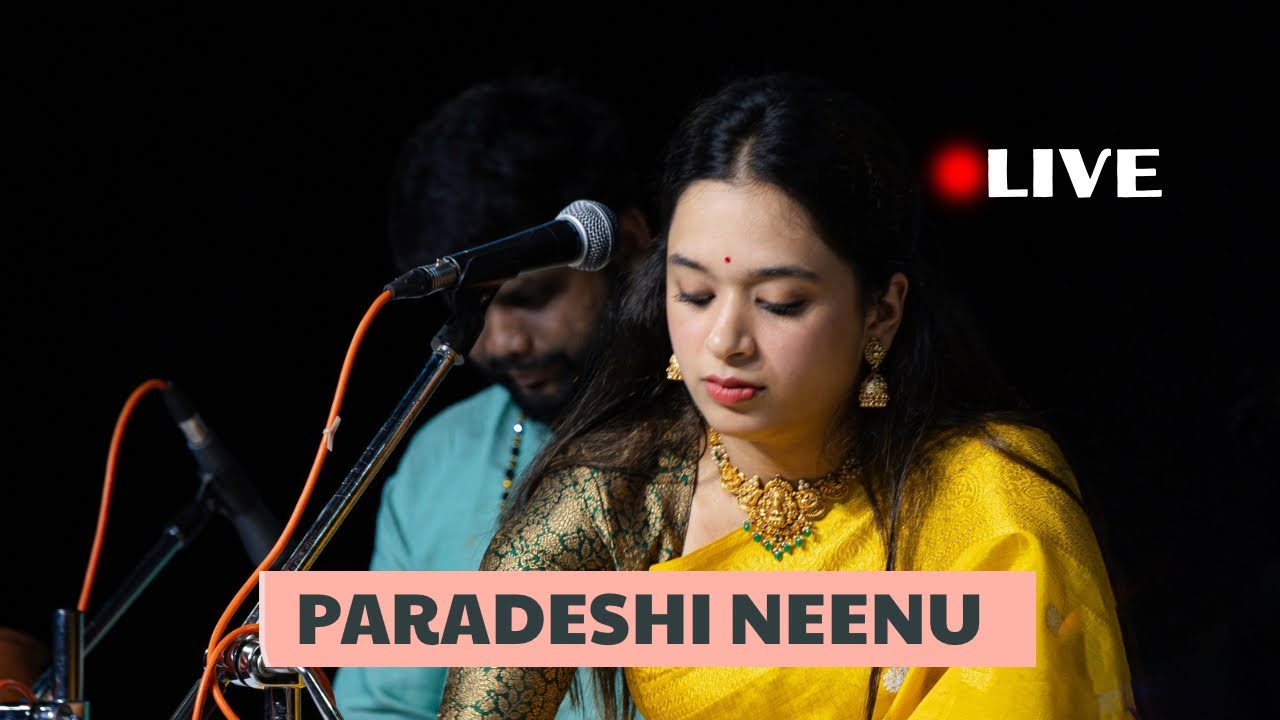
The timeless message of "Paradeshi Neenu" continues to resonate today, largely due to the efforts of dedicated classical musicians who bring these ancient compositions to modern audiences. Medha Vidyabhushan, a celebrated Carnatic vocalist, playback singer, and actress from Bengaluru, has delivered a particularly moving rendition of this song.
As the daughter of the renowned Carnatic vocalist Dr. Vidyabhushana, Medha has inherited a deep understanding of the Haridasa tradition and its emotional nuances. Her live performance of "Paradeshi Neenu" is a masterclass in expressive singing (bhava). She navigates the melodic contours of the composition with grace, ensuring that the profound philosophical meaning of the lyrics is conveyed with every note.
Her rendition, which can be viewed on her official YouTube channel (youtube.com/@medhavidyabhushanofficial), has garnered significant appreciation, with the specific live concert video (YouTube ID: qqjUIlufPFM) accumulating over 12,000 views. In her performance, Medha captures the essence of the "Paradeshi" -the vulnerability, the yearning, and ultimately, the surrender.
Often, such deeply emotive songs are set to ragas that evoke a sense of longing and devotion. Listeners interested in the emotional impact of specific scales might explore how Raga Kapi is explained to understand how melody enhances the lyrical meaning in Carnatic music. Furthermore, the devotional fervor in Medha's singing parallels the intense devotion found in other regional traditions, such as the Marathi abhangs, as seen in the meaning, history, and lyrics of Kanada Raja Pandharicha.
Modern Relevance and Digital Platforms
In an era characterized by rapid technological advancement, hyper-connectivity, and material pursuit, the message of "Paradeshi Neenu" is more relevant than ever. Modern life often encourages an endless accumulation of wealth, status, and digital validation, leading to increased anxiety and a sense of spiritual emptiness.
Vijaya Dasa's reminder that we are merely temporary visitors -Paradeshis -offers a powerful antidote to modern materialism. It encourages a shift in perspective, urging individuals to cultivate detachment and focus on inner growth rather than external accumulation. The philosophy of sharanagati provides a framework for finding peace amidst the chaos of contemporary life, teaching us to surrender our anxieties to a higher power.
Digital platforms like YouTube, Spotify, and social media have played a crucial role in bridging the gap between ancient wisdom and modern audiences. Artists like Medha Vidyabhushan utilize these platforms to share the rich heritage of Carnatic music and Haridasa literature with a global audience. Through high-quality live recordings and digital distribution, a 300-year-old song about spiritual detachment can now reach a young professional in Bengaluru, a student in New York, or a music lover in London, offering them a moment of reflection and tranquility.
The digital age, while often criticized for fostering distraction, also provides unprecedented access to spiritual and cultural treasures. By engaging with content like Medha Vidyabhushan's rendition of "Paradeshi Neenu," listeners can integrate the profound teachings of Sri Vijaya Vittala Dasa into their modern lives, finding a sense of grounding and purpose in an ever-changing world.
Frequently Asked Questions
1. What does "Paradeshi Neenu" mean?
"Paradeshi Neenu" translates to "You are a stranger" or "You are a foreigner" in Kannada. In the context of the song, it is a metaphor addressing the human soul as a temporary visitor in the material world, emphasizing the impermanence of earthly life.
2. Who composed "Paradeshi Neenu"?
The song was composed by Sri Vijaya Vittala Dasa (1682–1755), a prominent saint and composer of the Haridasa movement in Karnataka. He is considered the spiritual heir to Purandara Dasa and composed over 25,000 songs.
3. What is the core philosophy of the song?
The core philosophy revolves around vairagya (detachment from material possessions and relationships) and sharanagati (complete surrender to the Supreme Lord). It teaches that since the soul is a temporary visitor, it should seek refuge in the Divine rather than worldly attachments.
4. How does the song reflect Dvaita philosophy?
As a composition by a Madhwa saint, the song reflects Dvaita (dualism) by emphasizing the eternal distinction between the individual soul (the "Paradeshi") and the Supreme Lord. It highlights the soul's dependence on divine grace for salvation.
5. Where can I listen to Medha Vidyabhushan's rendition of this song?
You can listen to Medha Vidyabhushan's deeply emotive live rendition of "Paradeshi Neenu" on her official YouTube channel at youtube.com/@medhavidyabhushanofficial. The specific live performance (YouTube ID: qqjUIlufPFM) has been widely appreciated by classical music enthusiasts.
The Haridasa Tradition and Its Roots
The Haridasa movement, which profoundly influenced compositions like "Paradeshi Neenu," originated in the 13th and 14th centuries CE, prior to the rise of the Vijayanagara empire. This devotional revolution was characterized by two main groups: the Dasakuta, who conveyed complex philosophy in simple Kannada, and the Vyasakuta, who were proficient in the Vedas and Upanishads. The movement sought to make spiritual knowledge accessible to the masses, breaking the monopoly of Sanskrit in religious discourse.
The Haridasas primarily worshipped Vitthala, a manifestation of Lord Vishnu, and revered holy places such as Pandharapura in Maharashtra, Hampi in Karnataka, and Tirumala in Andhra Pradesh. The movement was influenced by earlier devotional traditions, including the Veerashaiva movement led by Basavanna in the 12th century and the Alvar saints of Tamil Nadu in the 10th century. In turn, the Haridasa movement influenced later spiritual leaders like Vallabhacharya in Gujarat and Chaitanya Mahaprabhu in Bengal, whose teachings eventually led to the formation of ISKCON.
To understand the broader context of this spiritual revolution, you can explore the Haridasa movement in Karnataka's history.
The Ankita Nama Tradition
A unique feature of Haridasa compositions is the use of an ankita nama, or pen name, which the composer embedded in the concluding lines of their songs. This practice not only served as a signature but also as a mark of devotion to their chosen deity. Sri Vijaya Vittala Dasa used the pen name "Vijaya Vittala," dedicating his works to Lord Vittala.
Here is a comparison of the pen names used by some of the most prominent Haridasa saints:
| Composer | Ankita Nama (Pen Name) |
|---|---|
| Purandara Dasa | Purandara Vittala |
| Kanaka Dasa | Kaginele Adikeshava |
| Vijaya Dasa | Vijaya Vittala |
| Jagannatha Dasa | Jagannatha Vittala |
| Vadirajatirtha | Hayavadana |
| Gopala Dasa | Gopala Vittala |
For more insights into the life and works of these great saints, you can read about Purandaradasa, the father of Carnatic music, and Kanakadasa's life, compositions, and legacy.
Published by Medha Naada
This guide is published by Medha Naada, Medha Vidyabhushan's official portfolio. It combines the credited sources below with plain-language listening or learning prompts. Historical details, song credits, and public records are limited to the cited material.
A written guide can support listening and preparation, but a qualified teacher remains the right source for personal vocal technique, pronunciation feedback, or repertoire decisions.
How this guide is supported
This article's explanation of Vijaya Vittala Dasa is editorial. The cited composer archive supports the Haridasa attribution and ankita context without presenting an unverified critical edition of the lyric.
- VijayaviTThaladasa. karnATik. Vijaya Dasa's Haridasa composer identity and Sri Vijaya Vittala ankita context.
- paradEshi nInu svadEshi nAnu. karnATik. Direct composition text, Vijaya Dasa attribution, and the work's Kannada lyric structure.